



December
What Is Kratom? Origin, Effects, Risks, and the Law in 2026
Updated on October 29, 2026 · Reading time: 10 minutes
Short answer: Kratom is the ground leaf of the Mitragyna speciosa, a tree in the coffee family that grows in Southeast Asia. The main active compounds are mitragynine and 7-hydroxymitragynine. In small doses, kratom primarily has a stimulating effect. In higher doses, it has a calming effect. As of 2026, Kratom is not listed on the Opium Act. It may not be sold as food in the Netherlands. Therefore, it is labeled as unsuitable for consumption.
Kratom is one of the most sought-after herbs in smart shops in the Netherlands. Yet many people don’t know exactly what it is. Does it come from a plant or a lab? Is it legal? And what are the risks? In this article, we lay out the facts.
You’ll learn where kratom comes from, what substances it contains, and how they work. You’ll also learn about the differences between the colors and varieties. We’ll explain the legal situation in 2026 and why it’s important to exercise caution. Be sure to check out our overview of Kratom at the smart shop.
Table of Contents
Where does kratom come from?
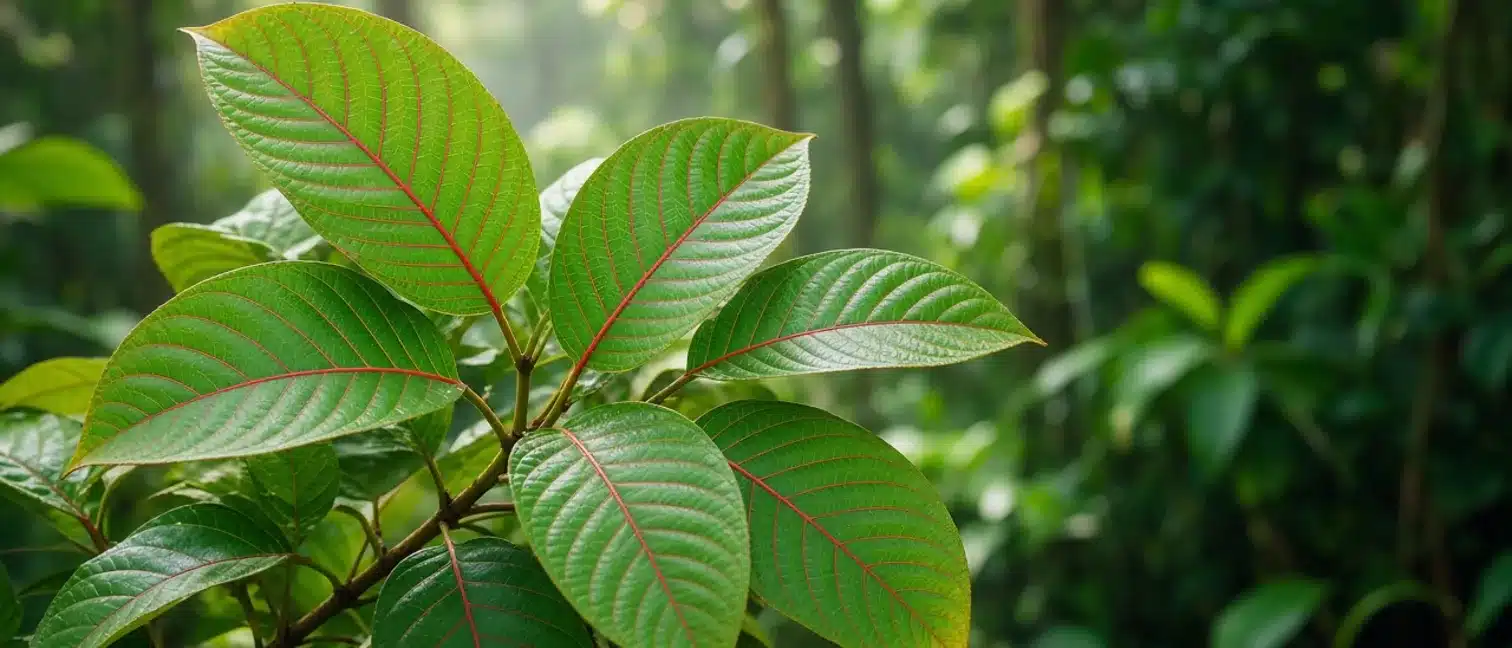
Kratom grows in the tropical forests of Thailand, Malaysia, Indonesia, and Papua New Guinea. The tree can grow to a height of more than twenty meters. It belongs to the same plant family as the coffee plant—the Rubiaceae family.
In Southeast Asia, farmers and laborers have been chewing the fresh leaves for centuries. They did so to be able to work longer in the heat. Kratom was also used in traditional medicine and at social gatherings. In Thailand, the plant was banned for a long time. That ban was lifted there in 2021.
What ingredients are in it?
The leaf contains dozens of alkaloids. The best-known is mitragynine. This substance makes up the majority of the alkaloids in the leaf. It also contains small amounts of 7-hydroxymitragynine, which is much stronger. Both substances act on the same receptors in the brain as opioids, though they do so in different ways. They also affect other systems, such as the adrenaline system and serotonin.
How does kratom work?
What makes kratom unique is that its effects depend on the dosage. Users and researchers describe two distinct effects.
These effects are based on user experiences and preliminary research. There are still few large-scale clinical studies. Kratom is not a drug, and we make no medical claims.
The Types and Colors
Kratom is often sold based on the color of the leaf’s grain. You’ll find red, green, and white kratom. The color indicates the leaf’s ripeness and the drying method. In addition, varieties are often named after a region, such as Maeng Da, Bali, or Borneo.
This classification is based primarily on experience and tradition. Scientifically, the difference between the colors has not yet been thoroughly studied. The alkaloid content can also vary from batch to batch.
How long does kratom last?
According to users, the first effects usually kick in within half an hour to an hour. The effects last a few hours. You can read more about this in our article How long does kratom last?.
Risks and Side Effects
Kratom is a plant, but that doesn't mean it's risk-free. Known side effects include nausea, constipation, sweating, itching, and dizziness. The risks increase with higher doses and frequent use.
Habituation and Dependence
People who use kratom daily can become accustomed to it. You’ll then need more and more to achieve the same effect. After prolonged daily use, withdrawal symptoms may occur if you stop. These can include restlessness, poor sleep, irritability, and muscle pain. Therefore, do not use kratom daily and take regular breaks.
Combinations
Never combine kratom with alcohol, opioids, sleeping pills, or benzodiazepines. Combining it with antidepressants and other medications can also lead to dangerous effects. Are you taking any medications? If so, always consult your doctor or pharmacist.
Who should not use it?
- ✓Pregnant women and women who are breastfeeding.
- ✓People under the age of 18.
- ✓People with liver or heart problems.
- ✓People with a history of addiction.
- ✓People who need to drive or operate machinery.
What will the law say in 2026?
Kratom, mitragynine, and 7-hydroxymitragynine are not listed in Schedule I or Schedule II of the Opium Act. Nor are they listed on the list for new psychoactive substances. Possession is therefore not a criminal offense. However, the European regulation on novel foods does apply. Kratom was never approved under that regulation. In 2025, the Trade and Industry Appeals Tribunal confirmed that kratom is classified as a food product. Therefore, it may not be sold in the Netherlands for eating or drinking. Smartshops therefore offer kratom as a product that is not suitable for consumption.
Other countries sometimes have stricter rules. Kratom is banned in Denmark, Sweden, Poland, and Ireland, among other places. So never take it with you when traveling without checking the rules at your destination.
Kratom is not classified as a drug in the Netherlands under the Opium Act. Nor is it an approved food product. Be aware of this dual status.
Buy Kratom at a smart shop
Only buy kratom from a reputable seller. Look for clear information about its origin and proper packaging without any medical claims. In our kratom category You'll find various types from well-known brands. Store kratom in a cool, dry, dark place and out of the reach of children.
How is kratom made?
Kratom sold in stores almost always consists of ground leaves. The leaves are picked by hand. They are then dried, either indoors or outdoors in the sun. The drying method affects the color and, according to experts, also the effects. After drying, the leaves are finely ground into a green powder. That powder is packaged in sachets or capsules. Extracts are also available. These are stronger than the regular powder and require extra caution.
Kratom and coffee: family
Because kratom belongs to the coffee family, people often compare it to coffee. That’s only partly true. Kratom contains no caffeine. The compounds work in very different ways. In small amounts, the sensation can resemble that of a strong cup of coffee. At higher doses, however, it has a calming effect. That’s what makes kratom such a unique plant.
What do health authorities say?
The European Monitoring Center for Drugs and Drug Addiction has been monitoring kratom for years. According to the agency, few serious problems have been reported in Europe, but there are concerns about potent products and combinations with other substances. In the United States, the FDA warns against the use of kratom. Products containing added 7-hydroxymitragynine have also entered the market there. These are much stronger than regular leaves. In 2025, the FDA recommended stricter regulation of that substance. The advice is therefore: choose natural leaves and stay away from enhanced products.
Myths About Kratom
- ✓Kratom is an opioid. Not exactly. It acts on the same receptors but is a plant with a different profile.
- ✓"Natural" doesn't necessarily mean safe. That's not true. Plants can also cause side effects and lead to tolerance.
- ✓More is better. That's not true. A higher dose mainly causes more nausea.
- ✓All colors are scientifically different. That has not yet been proven.
Responsible Use of Kratom
Anyone who buys kratom should be aware of the risks. Don’t use it every day. Keep track of how often you use it. Do you find yourself wanting to use it more and more often? If so, take a break and talk to someone you trust. Seek help from your doctor if you’re having trouble quitting. Addiction treatment centers in your area can also offer advice, anonymously if you prefer.
Kratom vs. Kanna
Kratom is sometimes compared to kanna. Cannabis is a succulent native to South Africa. Kanna is also traditionally chewed. It works differently than kratom and, according to users, primarily has a mood-enhancing and relaxing effect. Neither plant is listed under the Opium Act in the Netherlands. Do not combine them without knowing exactly what you’re doing.
The same applies to kanna: start slowly and do not combine it with medications or other substances. Always read the information on the packaging.
Storage and Shelf Life
Store kratom in a tightly sealed container in a cool, dry, and dark place. Moisture and light cause the quality to deteriorate. When stored properly, kratom will remain good for about one to two years. Does it smell musty, or do you see mold? If so, throw it away. Always keep kratom out of the reach of children and pets.
Kratom is a widely purchased herb in the Netherlands that occupies a unique position. It is not classified as a drug under the law, nor is it classified as a food product. Anyone who purchases it does so at their own risk. Use it responsibly and with caution.
Kratom and related products at Smartific
Kratom · Cannabis · Relaxation · Herbs · Scales
Frequently Asked Questions About Kratom
What is kratom?
Is kratom legal in the Netherlands?
What is the difference between red, green, and white kratom?
Is kratom addictive?
Can I combine kratom with alcohol?
Important
This article is intended for informational purposes only. Smartific does not supply any products that violate Dutch law. If you have any doubts or need personal advice, always consult a doctor.