



September
The Difference Between a Tincture and an Extract Explained
Updated on October 29, 2026 · Reading time: 9 minutes
Short answer: A tincture is a liquid infusion of a plant, usually in alcohol or glycerin, that you measure out with a dropper. An extract is a broader term. It refers to any concentrated form of a plant, whether liquid, powder, or resin. Therefore, every tincture is an extract. However, not every extract is a tincture. Extracts are often stronger and are denoted by a ratio such as 10:1.
You'll find both tinctures and extracts at smart shops and drugstores. They look similar, but they aren't the same. If you know the difference, you can make better choices and dose more effectively.
In this article, you'll learn how tinctures and extracts are made. You'll also learn what numbers like 10:1 and 1:5 mean and how to choose the right form. We'll wrap up with tips on how to use them properly save. Be sure to check out our tinctures.
Table of Contents
What is an extract?
An extract is a product in which the substances from a plant have been concentrated. This is done by steeping the plant in a solvent. The plant material is then removed. Sometimes the solvent is also removed. What remains is a concentrated form of the plant.
An extract can be a liquid, but it can also be a powder, a thick syrup, or a resin. Well-known examples include vanilla extract used in cooking and powdered extracts from mushrooms such as lion’s mane or Reishi.
What is a tincture?
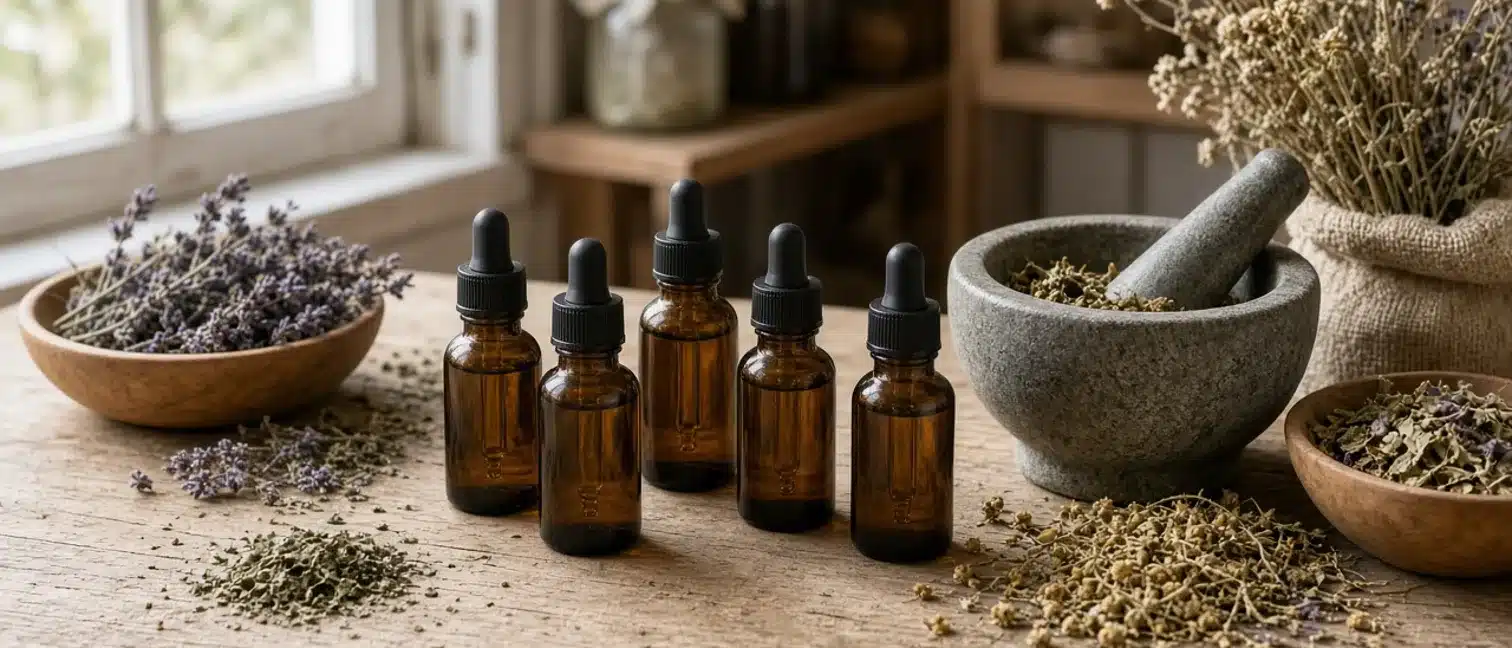
A tincture is a special type of extract. It is always liquid. The plant is steeped for weeks in a mixture of alcohol and water. Sometimes glycerin or vinegar is used instead of alcohol. After steeping, the liquid is strained. The resulting tincture is poured into a dark bottle with a dropper.
Tinctures are one of the oldest ways to preserve herbs. Pharmacists have been using them for centuries, long before pills were invented. Alcohol extracts many compounds from the plant and helps the product stay fresh for a long time.
The difference at a glance
What do the numbers mean?
Tinctures and extracts often list a ratio. That ratio indicates their strength. The way it works is different for tinctures and extracts.
For tinctures: 1:5
In a tincture, the first number represents the weight of the plant. The second number represents the amount of liquid. A 1:5 tincture means that 1 gram of plant was used per 5 milliliters of liquid. The smaller the second number, the stronger the tincture.
For extracts: 10:1
With an extract, the ratio is expressed in reverse. A 10:1 extract means that 10 grams of the plant were needed to produce 1 gram of extract. In theory, the extract is then ten times as concentrated as the plant. But that doesn’t tell the whole story. The quality of the plant and the extraction method determine how much active ingredient is actually present.
Standardized extract
Sometimes a percentage is listed on the label. For example, 30 percent beta-glucans in a mushroom extract. This is called a standardized extract. The manufacturer then guarantees a fixed amount of a specific substance. This makes it easier to compare products.
What methods are available?
- ✓Maceration. The plant is steeped in liquid for weeks. This is the traditional method for making tinctures.
- ✓Hot-water extraction. Commonly used with mushrooms such as reishi.
- ✓Double extraction. First with water, then with alcohol. That's how you extract both types of substances from the plant.
- ✓CO2 extraction. A clean method using pressure and carbon dioxide. Widely used with CBD.
- ✓Evaporation. The liquid is removed until only a powder or resin remains.
When should you choose a tincture?
A tincture is handy if you want to measure out precise doses in small increments. You just count the drops. Your body often absorbs a tincture taken under the tongue more quickly than a capsule. Don’t want alcohol? Then choose a glycerin-based tincture.
When should you choose an extract?
An extract is useful if you want a concentrated form in a capsule or powder. That way, you don't have to use a large amount of the plant. The taste is also often less intense. You can mix a powdered extract into a smoothie or tea.
Every tincture is an extract. Not every extract is a tincture.
How to Use a Tincture
- 1Shake the bottle well.
- 2Read the recommended amount on the label.
- 3One drop under the tongue or in a glass of water.
- 4If necessary, hold it under your tongue for a moment before swallowing.
- 5Start with the smallest amount.
Save
Store tinctures and extracts in a cool, dry, and dark place. Light and heat break down the active ingredients. Make sure to screw the cap on tightly. Alcohol-based tinctures often last for years. Glycerin-based tinctures and water-based liquid extracts have a shorter shelf life. Always check the expiration date. Keep them out of the reach of children.
Tinctures and Extracts at Smartific
In our tinctures You'll find, among other things, herbs and mushrooms in liquid form. Mushroom extracts such as lion's mane and reishi can be found in the Medicinal mushrooms. Read more about The History of Tinctures.
A Brief History
The word “tincture” comes from the Latin *tinctura*, which means “coloring.” As early as the Middle Ages, monasteries and apothecaries were making tinctures from herbs. Alcohol was one of the few ways to preserve plant substances for long periods of time. In the nineteenth century, tinctures were listed in every pharmacopoeia. Later, they were largely replaced by tablets. Today, tinctures are popular again, especially among people who use herbs and mushrooms.
Real-world examples
With mushrooms such as reishi and chaga, you often see double extracts. Some of these compounds are found in the mushroom’s cell wall. You need hot water to release them. With herbs such as valerian and passionflower, you often see traditional alcohol-based tinctures. With CBD, the extract is usually an oil extract. Strictly speaking, CBD olie is therefore not a tincture, even though the term is used that way.
Alcohol or glycerin?
Alcohol extracts many different substances from a plant and helps the product stay fresh for a long time. The downside is the taste and the fact that some people don’t want alcohol. A few drops do amount to a very small quantity, though. Glycerin has a sweet taste and is alcohol-free. However, it extracts fewer compounds from a plant and has a shorter shelf life. For children, pregnant women, and people who do not drink alcohol, a glycerin-based tincture is an option. If in doubt, always consult a doctor or pharmacist.
What should you look for when buying?
- ✓A clear plant name, preferably including the Latin name.
- ✓The part of the plant that is used, such as a leaf, root, or fruiting body.
- ✓The ratio or percentage of the active ingredient.
- ✓The solvent: alcohol, glycerin, or water.
- ✓An expiration date and a lot number.
- ✓A dark bottle that blocks out light.
Common Mistakes
Many people take the same amount of an extract as they would of the whole plant. That may be too much. A 10:1 extract is much stronger than dried herb. Always check the label. People also often store bottles on a sunny windowsill, where the active ingredients degrade more quickly. A cabinet is a better option.
Want to make your own tincture?
Many people make a simple herbal tincture at home. You can use common kitchen herbs like rosemary or thyme. Please be careful, though. Not every plant is safe. Some plants contain toxic substances. It’s also difficult to determine the strength of a homemade tincture. For herbs with strong effects, a store-bought product with a clearly labeled strength is the safest choice.
Can I use tincture and extract together?
You may have both a tincture and an extract from the same plant at home. If so, don’t use them at the same time. You’ll end up taking more than you realize. Choose one form and stick to the recommended amount. Are you taking any medications? If so, ask your pharmacist whether a particular herb or mushroom is safe to use with them.
In summary
A tincture is a liquid extract, usually made with alcohol, that you take drop by drop. An extract is any concentrated form of a plant. When choosing one, consider the form, the solvent, and the strength. Always read the label. Start with a low dose. Store your bottles in a cool, dark place. This way, you’ll get the most out of your herbs and mushrooms, safely.
Not sure which option is best for you? Please contact our customer service team. We'd be happy to help you figure it out.
In short: check the label every time you make a purchase. It tells you how the product is made and how strong it is. That way, you'll know exactly what you're getting.
Want to read more? Then check out our article on Working with Medicinal Herbs.
Tinctures and Extracts at Smartific
Tinctures · Supplements · CBD oil · Herbs · Medicinal mushrooms
Frequently Asked Questions About Tinctures and Extracts
Is a tincture the same as an extract?
What does 10:1 mean in the context of an extract?
What does 1:5 mean in the context of a tincture?
Does a tincture always contain alcohol?
How long does a tincture last?
Important
This article is intended for informational purposes only. Smartific does not supply any products that violate Dutch law. If you have any doubts or need personal advice, always consult a doctor.