Free shipping over €125
 Discreetly packaged
 Track & Trace
 Secure Payment
 8.6/10 customer rating.








December
Kratom is a tropical tree native to Southeast Asia. It's used for its stimulant and pain-relieving effects.
Kratom is a product that is becoming increasingly popular, especially in Asia, where it has been used as a drink for centuries. But what exactly is kratom and how does it work?
Kratom (Mitragyna speciosa)[1]is native to the densely forested regions of Southeast Asia, particularly Thailand, Malaysia, and Indonesia. The history of kratom dates back hundreds of years, where it was traditionally used by local populations for its stimulant and calming properties. Indigenous communities chewed on the leaves or made tea from them as a natural remedy for fatigue and pain.
There are different types of kratom: The color of the leaf veins, such as red, green, or white, often indicates the variety and its effects. Red kratom is often associated with relaxation, while green and white varieties can be more stimulating.
Table of Contents
Using kratom as a drink
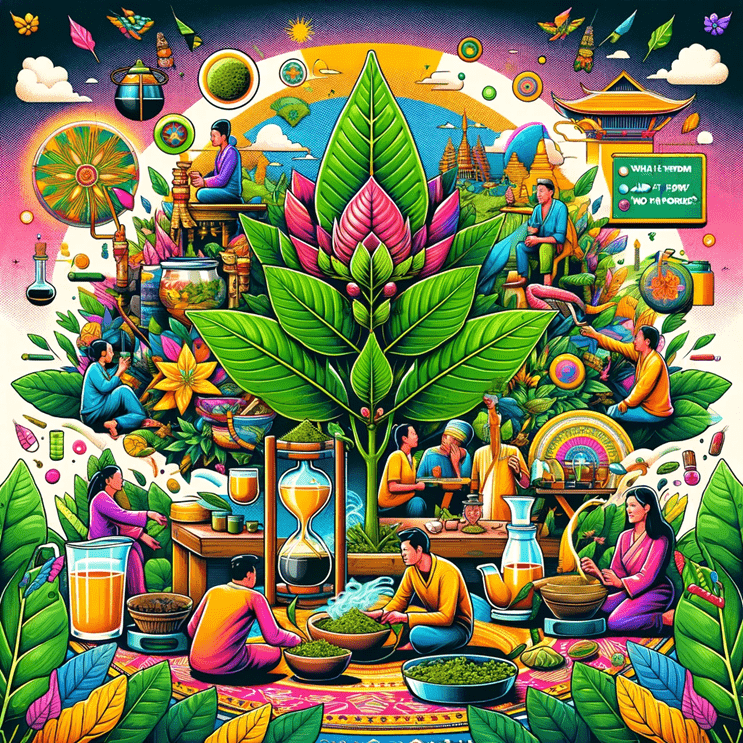
In Asia, kratom is often drunk as tea. The kratom leaves are first dried and ground into powder. The powder is then either kratom extract mixed with warm water to make a refreshing kratom tea. In the traditional societies of Southeast Asia, kratom was often used for various purposes, including labor relief, social interaction, and spiritual ceremonies. The leaves were chewed or processed into tea, leading to a feeling of alertness and energy.
What makes this drink so special is the unique combination of flavors and effects it offers. The taste of kratom tea can range from slightly bitter to spicy, depending on the type of kratom used and the brewing method. The effects can also vary, with some people experiencing energy and focus, while others feel relaxation and calm.
The mechanism of action of kratom is a complex topic
Kratom contains active compounds such as mitragynine and 7-hydroxymitragynine, which interact with your brain in an interesting way. They do this by communicating with opioid receptors, leading to pain relief.[2], relaxation, and even that sense of well-being that makes you feel so good. A major advantage is that it doesn’t cause the same breathing problems as traditional opioids, making it a more appealing alternative for pain relief for some people.
In addition to mitragynine and 7-hydroxymitragynine, kratom also contains other compounds, such as ajmalicine and rhynchophylline, which may play a role in the plant's effects. The exact interactions between these substances and the human body are still being investigated.
How is kratom used today?
Today, kratom is used worldwide by people seeking natural alternatives for pain relief, mood enhancement, or as a tool to overcome opioid addiction. Some use it recreationally for its calming or stimulating effects.
One of the most notable benefits of kratom is its potentially effective pain relief. Many people use it as an alternative to opioid medication for conditions such as chronic pain, arthritis, and migraines.
Kratom can also have mood effects[3] ranging from a feeling of relaxation to mild euphoria. Some users report that it helps them reduce anxiety and depression. Depending on the kratom strain, it can also increase energy, which can help people with fatigue and improve their concentration.
If you're interested in exploring natural remedies, kratom might definitely be worth considering. Just ensure you're well-informed and act responsibly, and who knows, you might discover even more about this fascinating plant!
Sources
[1] https://www.emcdda.europa.eu/publications/drug-profiles/kratom_en
[2] https://www.hackensackmeridianhealth.org/en/healthu/2023/06/23/kratom-health-benefits-and-risks
[3] https://www.webmd.com/diet/health-benefits-kratom