


June
Psychedelic Art: History, Characteristics, and Cultural Influence
Updated on October 29, 2026 · Reading time: 10 minutes
Short answer: Psychedelic art is visual art inspired by psychedelic experiences. The style emerged in the 1960s in San Francisco and London. Its characteristics include bright, contrasting colors, swirling patterns, fractals, and distorted letters. Well-known artists include Wes Wilson, Victor Moscoso, Martin Sharp, and Alex Grey. Its influence is still evident in music, fashion, video games, and digital art.
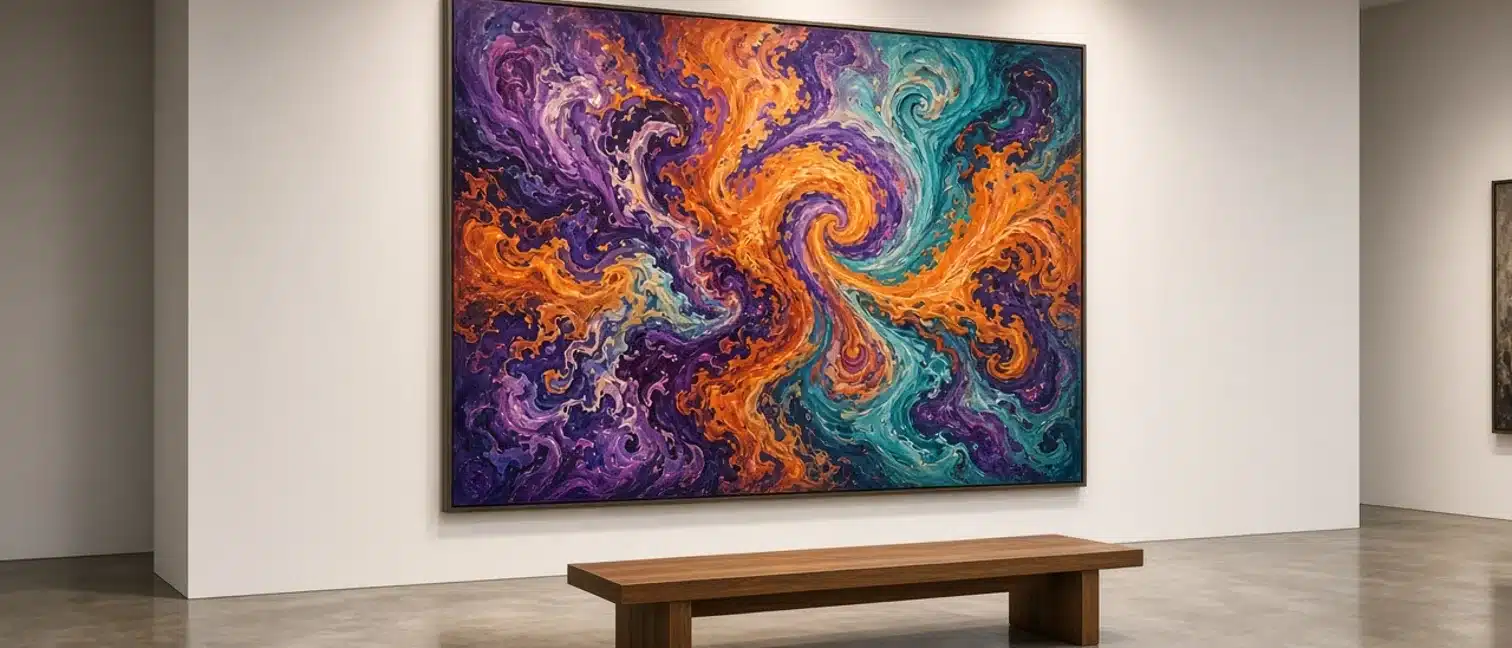
Bright colors that seem to move. Letters that blend into the background. Patterns that repeat endlessly. You can recognize psychedelic art right away. The style emerged in the 1960s but has never completely disappeared. You see it on festival posters, album covers, in fashion, and in digital art.
In this article, you’ll learn how psychedelic art originated and what its characteristics are. We’ll discuss well-known artists and movements. You’ll also learn how the style has influenced culture and what role it plays today. This article is about art and cultural history, not about the use of substances.
Table of Contents
What is psychedelic art?
Psychedelic art is art that seeks to visualize the experience of a psychedelic trip. Think of altered colors, geometric shapes, moving patterns, and a sense of oneness. Not all artists used psychedelics themselves. Some drew inspiration from stories, music, meditation, or dreams. So it's mainly about visual language.
The word “psychedelic” was coined in 1957 by the British psychiatrist Humphry Osmond. It literally means “making the mind visible.” The word was soon used to describe the music, clothing, and art associated with the new counterculture.
Pioneers of the style
Psychedelic art didn’t come out of nowhere. Artists drew inspiration from earlier movements. The graceful lines of Art Nouveau around 1900 were a major source of inspiration. Think of Alfons Mucha’s posters. Salvador Dalí’s surrealism also played a role, as did the optical art (Op Art) of Bridget Riley and Victor Vasarely. Op art plays with lines and contrasts that make the eye flicker.
In addition, there is a much older tradition. Indigenous For centuries, indigenous peoples in the Amazon region have been creating art connected to ceremonies and plants. The Shipibo in Peru are known for their complex geometric patterns on textiles and pottery. The Huichol in Mexico create colorful thread paintings and beadwork that reflect their peyote ceremonies.
The 1960s: San Francisco and London
In the mid-1960s, San Francisco became the center of the counterculture. Bands such as the Grateful Dead and Jefferson Airplane performed at venues like the Fillmore and the Avalon Ballroom. Posters were created for those concerts that showcased a new style.
Wes Wilson is often regarded as the father of the psychedelic poster. He created lettering that was so distorted it became almost illegible. Victor Moscoso used clashing colors that seemed to vibrate next to one another. Together with Rick Griffin, Alton Kelley, and Stanley Mouse, they formed a group that became known as the Big Five of poster art.
At the same time, a distinct scene was emerging in London. Australian artist Martin Sharp designed album covers for Cream, including 1967’s *Disraeli Gears*. The Dutch collective The Fool designed clothing and a mural for The Beatles’ Apple Store. The cover of the 1967 album *Sgt. Pepper’s Lonely Hearts Club Band* also became an icon of that era.
Characteristics of Psychedelic Art
- ✓Bright, saturated colors and clashing color combinations.
- ✓Swirls and undulating shapes without any straight lines.
- ✓Repeating patterns, fractals, and mandalas.
- ✓Letters that distort and blend into the image.
- ✓Symmetry and geometry, often centered on a point.
- ✓Themes such as nature, the cosmos, awareness and a sense of connection.
A key feature is the interplay with perception. Artists used complementary colors such as red and green or orange and blue. When placed side by side, these colors appear to move. This makes a still image feel almost alive.
Psychedelic art attempts to convey something that is difficult to put into words. That is why it appeals to so many people, including those who have never had a psychedelic experience themselves.
Visionary Art
Starting in the 1980s, a movement known as “visionary art” emerged. Its best-known representative is the American artist Alex Grey. He paints the human body as if you were looking right through it, revealing layers of muscles, nerves, and energy. His work became world-famous through the album covers for the band Tool.
Another important figure is Pablo Amaringo from Peru. He began as a healer and later became a painter. His detailed paintings depict the visions he described during ayahuasca ceremonies. His work gained international recognition through the 1991 book *Ayahuasca Visions*. Read more about that plant in our article about ayahuasca.
Impact on Culture
Music
Music and psychedelic art have always been intertwined. The posters of the 1960s were followed by the light shows at Pink Floyd concerts. In the 1990s, this style resurfaced in the goa and psytrance scenes. Even today, festivals make full use of this visual language in their set design, lighting, and video. Read more about this connection in our blog post about music and psychedelic experiences.
Fashion and Design
Tie-dye shirts, colorful prints, and floral patterns are straight out of the 1960s. Major fashion houses regularly draw inspiration from this style. You also see the wavy letters and bright colors time and again in graphic design and advertising.
Digital Art and Games
Computers made new forms possible. Fractals—mathematical patterns that repeat endlessly—became popular in the 1980s. Today, artists create psychedelic works using 3D software, projections, and virtual reality. This visual language is also evident in video games and music videos.
Psychedelic Art in Museums
For a long time, psychedelic art was viewed as popular culture rather than serious art. That has changed. In recent decades, museums in the United States and Europe have organized major exhibitions on the art of the 1960s. Original concert posters from that era are now being purchased by collectors for high prices.
Psychedelica and Creativity
The question of whether psychedelics make people more creative is a popular one. There are stories of artists, musicians, and scientists who say they’ve drawn inspiration from their experiences. Scientifically, this is difficult to measure. Read more in our blog about psychedelic experiences and creativity.
Get Started on Your Own
You don’t need to use any substances to create psychedelic art. Many artists draw inspiration from music, meditation, or nature. Start with simple exercises. Draw a mandala from a central point. Play with complementary colors. Let letters morph until they take on a shape. That’s how you’ll get to know the visual language.
The Netherlands and Psychedelic Art
The Netherlands played a notable role. The Fool was founded by the Dutch duo Simon Posthuma and Marijke Koger. After their time in London, they moved to the United States and released an album there as well. In Amsterdam during the 1960s, Paradiso and the Melkweg became gathering places for music, art, and counterculture. The light shows and posters at those venues reflected the same influences as those in San Francisco and London.
This style is still visible in the Netherlands today. Think of festival sets, murals in cities, and artists who work with projections and light. At light festivals such as the Amsterdam Light Festival, you’ll often see works that play with color, movement, and perception.
How can you tell if a poster is an authentic one from the 1960s?
Original posters from San Francisco are highly sought after by collectors. There are many reprints in circulation. You can recognize a first edition by the paper, the print quality, and the series numbering, among other things. Posters from the Fillmore and the Avalon Ballroom often have their own unique numbers. If you’re serious about collecting, have a poster appraised by a specialist.
For those who simply love the style, reprints and modern posters are an affordable way to bring the colors of the 1960s into your home.
Psychedelic art demonstrates just how closely imagery, music, and culture are intertwined. What began as posters for concerts at a few venues in San Francisco evolved into a visual language recognized around the world. More than fifty years later, that visual language continues to inspire new generations of designers and artists.
Want to learn more? Then check out our article on The Role of Psychedelics in Modern Therapies.
Inspiration at Smartific
Frequently Asked Questions About Psychedelic Art
What is psychedelic art?
When did psychedelic art emerge?
Who are some well-known psychedelic artists?
What is visionary art?
Do you have to use substances to create psychedelic art?
Important
This article is intended for informational purposes only. Smartific does not supply any products that violate Dutch law. If you have any doubts or need personal advice, always consult a doctor.