



May
The influence of music on psychedelic experiences
Updated on October 29, 2026 · Reading time: 10 minutes
Short answer: Music has a significant influence on the course of a psychedelic experience. In clinical trials involving psilocybin, music is a standard part of the session. Studies show that the way participants experience the music is linked to the outcome. Researchers therefore carefully curate playlists that evolve in tandem with the course of the experience.
Anyone who has ever heard music during a deeply emotional experience knows just how powerful the influence of sound can be. This is even more true during psychedelic experiences. Music can provide direction, offer comfort, evoke excitement, or, conversely, bring a sense of calm.
In clinical research involving psilocybin, music is therefore not a minor consideration. In this article, you’ll learn what research says about the role of music, how researchers put together playlists, and why set and setting are so important. This article is for informational purposes only and does not constitute advice to use substances.
Table of Contents
Why Music Plays Such an Important Role
Psychedelic substances such as psilocybin act, in part, through the 5-HT2A receptor in the brain. They alter the way you perceive and process stimuli. Emotions are often felt more strongly. Music is also experienced more intensely. People describe not only hearing music, but also feeling or even seeing it.
As a result, music can serve as a kind of guide. Calm music can help you relax. Powerful music can bring emotions to the surface. Music that isn’t appropriate, on the other hand, can actually cause unease or resistance. Music is therefore an important part of the setting—the environment in which the experience takes place.
What does the research say?
One of the best-known studies was conducted by Mendel Kaelen and colleagues at Imperial College London. They studied 19 patients with depression who were administered psilocybin in a clinical setting. In their 2018 publication, they demonstrated that the way patients experienced the music was associated with a reduction in depressive symptoms one week later. A positive experience of the music was associated with a better outcome. Music that was perceived as distracting was associated with less improvement.
In 2021, researchers at Johns Hopkins University compared two types of music during psilocybin sessions. One playlist consisted of Western classical music. The other consisted of overtone music, including gongs and singing bowls. In this small study with 10 participants, both types of music appeared to yield similar results. This suggests that the style matters less than how well the music aligns with the experience.
How Researchers Put Together Playlists
In clinical research, playlists are carefully curated. They follow the progression of a session. As early as 1972, Helen Bonny and Walter Pahnke described how music can be tailored to the different phases of a psychedelic experience. That approach is still used today.
- 1Beginning: Calm, familiar music that helps you relax.
- 2Build-up: music that gradually becomes more intense.
- 3Piek: deep, often emotional music without lyrics.
- 4Return: warm and comforting music.
- 5Closing: light music that helps you return to the here and now.
One example is the Copenhagen Music Program, which was published in 2022. This playlist is designed for clinical sessions lasting 4 to 6 hours. The music is mostly instrumental, as lyrics can be distracting or impose a direction that doesn’t fit the experience of the moment.
In psychedelic research, music is not merely background noise. It is one of the most important elements of the environment and can significantly shape the experience.
Set and Setting
"Set" refers to your mindset: your expectations, mood, and intentions. "Setting" refers to your environment: the space, the people around you, and, of course, the music. Both have a major influence on how an experience unfolds. Read more about set and setting in our article on Psychedelics and our consciousness.
- ✓A quiet and safe environment free of disruptions.
- ✓A trusted person who stays level-headed and can help.
- ✓Comfortable clothing, a blanket, and water.
- ✓Music without lyrics and without sudden loud noises.
- ✓An eye mask to help you turn your attention inward.
Music and Emotions
Music can evoke memories and emotions. That can be valuable, but it can also be confrontational. In therapeutic settings, counselors are trained to handle this. Outside of a clinical setting, that kind of guidance is usually not available. That’s an important difference. Music that’s enjoyable at a party can feel very different in another setting.
Researchers emphasize that personal preference plays a role. Music that someone doesn't like can provoke resistance. That's why study participants are often given the opportunity to listen to the music in advance or to discuss their preferences.
What does the law say?
Psilocybin is classified as a Schedule I substance under the Opium Act in the Netherlands. Magic mushrooms have been classified as a Schedule II substance since 2008. Magic truffles are legally available. Anyone considering taking truffles should first educate themselves thoroughly about their effects and risks. Never combine them with alcohol or other substances. Are you taking medications such as antidepressants, or do you have mental health issues? If so, do not use magic truffles. Also, keep a trip stopper on hand.
Silence and the Sounds of Nature
It’s not just music that matters. Silence can also be valuable. Some people find music overwhelming at certain times. In clinical studies, participants are therefore often given the option to ask for the music to be turned down or paused. Nature sounds such as rain, wind, or the ocean are sometimes used as a gentle transition. They create a sense of space without a melody that demands attention.
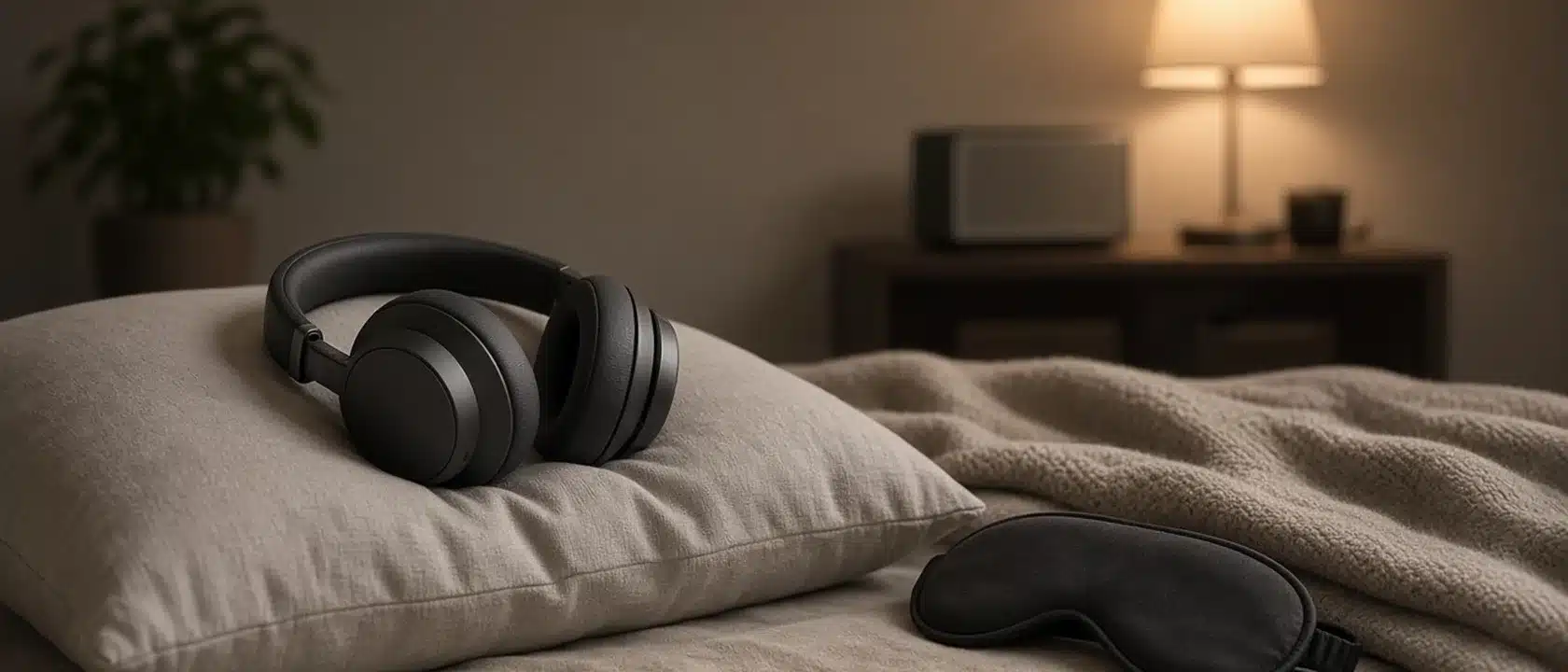
Volume is also important. Sound that’s too loud can be overwhelming, especially when the sensory experience is more intense. A good pair of headphones can help block out distracting outside noises. An eye mask helps focus attention inward. That’s also why both are often used together in research.
Music and Microdosing
With microdosing, the dose is so low that it doesn’t induce a “trip.” People who microdose sometimes report that they experience music more intensely or that they enjoy it more. There is still a lack of solid research on this topic. Moreover, many studies on microdosing show a strong placebo effect. Read more in our article about Microdosing truffles.
Integration After the Experience
Music can also play a role after the experience. Some people listen to the same music again later to reflect on what they’ve experienced. In therapeutic settings, time is set aside after the session to discuss the experience. This is called integration. Read more about this process in our article on Integration of Psychedelic Experiences.
What Science Doesn't Know Yet
- ✓What kind of music works best for each person.
- ✓How music you choose yourself compares to a preset playlist.
- ✓Exactly how significant the effect of music is in larger studies.
- ✓How music works in conjunction with therapy.
Music in Traditional Ceremonies
The use of music in connection with psychoactive plants is not new. In many cultures, music has played a role in ceremonies for centuries. In the Amazon region, healers sing songs called icaros during ayahuasca ceremonies. According to tradition, these songs help to ceremony to induce. In Mexico, the Mazatec healer María Sabina sang during ceremonies involving mushrooms. Drums and rattles are also used in many traditions.
Modern researchers build on that insight. They, too, view music as a way to give structure to an experience that would otherwise be difficult to guide. The difference is that traditional ceremonies are embedded in a culture with its own meanings and rituals.
Risks and Caution
A psychedelic experience can be intense, even with good music. Anxiety, panic, and confusion may occur. People with mental health vulnerabilities or a family history of psychosis are at increased risk. Music is no guarantee of a positive experience. Therefore, always make sure to sober chaperone and a safe place.
Want to learn more? Then check out our article on Psychedelics in Modern Psychiatry.
Discover more at Smartific
Magic truffles · Magic Truffle Tea · Microdosing truffles · Psychedelica · Trip Stopper
Frequently Asked Questions About Music and Psychedelic Experiences
Why is music important during a psychedelic experience?
What kind of music do researchers use?
Does the music genre matter?
Why music without lyrics?
Are magic truffles legal in the Netherlands?
Important
This article is intended for informational purposes only. Smartific does not supply any products that violate Dutch law. If you have any doubts or need personal advice, always consult a doctor.