Free shipping over €125
 Discreetly packaged
 Track & Trace
 Secure Payment
 8.6/10 customer rating.









September
Ayahuasca: Effects, Risks, and Laws
Published on September 2, 2026
You may view a ceremony as an opportunity to process emotions or break out of entrenched patterns. Ayahuasca can indeed evoke powerful images, memories, and feelings. However, the outcome is unpredictable.
The composition varies depending on how it is prepared. Your health, medication use, mood, and surroundings also influence the experience. What one person describes as meaningful may cause another to experience panic, dehydration, or prolonged anxiety.
An intense experience is not automatically a safe or effective treatment.
Table of Contents
Why Ayahuasca Doesn't Have a Fixed Potency

Traditional recipes usually include the vine Banisteriopsis caapi and a plant containing DMT, such as Psychotria viridis. However, the types of ingredients used, the quantities, and the cooking method may vary.
Harmala alkaloids from the vine temporarily inhibit the enzyme monoamine oxidase A. As a result, DMT is broken down more slowly after ingestion. The psychoactive effects can then last for several hours.
Ayahuasca does not come with a reliable label listing ingredients and milligrams. Even liquid from the same pot may not have exactly the same concentration throughout. Therefore, there is no general dose that is safe or appropriate for everyone.
What You Might Notice While It's Running
Colors, sounds, and time may feel different. Some people see patterns or vivid scenes. Memories and emotions can come one after another in rapid succession, without you having much control over them.
Physical reactions include nausea, vomiting, diarrhea, sweating, and dizziness. Heart rate and blood pressure may also change. In certain traditions, vomiting takes on a ritual significance, but physically, it remains a loss of fluids.
Personal insight is not a research finding
Participants sometimes report that they view relationships, behavior, or substance use differently. Such insights can lead to a conversation or a concrete change in behavior. It does not prove that alcohol treats a medical condition.
Researchers are studying potential applications for conditions such as depression and substance use disorders. Such studies involve selected participants, controlled conditions, and professional supervision. The results are not directly applicable to a commercial ceremony.
- ✓Experiences vary greatly from person to person.
- ✓Positive stories do not predict how you will react.
- ✓A difficult session can have a lasting effect.
- ✓A ceremony is not a substitute for regular treatment.
The risks associated with ayahuasca sometimes begin before the session

Temporary inhibition of monoamine oxidase A can affect the action of medications and other substances. In particular, combinations with substances that affect serotonin, blood pressure, or heart rate can be dangerous.
Antidepressants, stimulants, and certain medications for pain, cough, or migraines require special attention. Never stop taking prescribed medication on your own in order to participate. Discuss possible interactions with a doctor or pharmacist.
Combining substances makes the reaction less predictable
Alcohol, stimulants, and other psychedelics can increase physical or psychological stress. Cannabis can intensify anxiety, confusion, and a rapid heart rate. Background information on THC can be found in the section Marijuana.
A so-called trip stopper It does not reliably stop a psychedelic experience. Also, do not take any random sedative during a difficult experience. That could cause new interactions.
- ✓Please list all medications and supplements.
- ✓Do not mix this beverage with alcohol or drugs.
- ✓Do not add more yourself if it does not work.
- ✓Do not drive while the effects are present or while experiencing aftereffects.
- ✓Call 112 if the person is unconscious, having a seizure, or experiencing severe shortness of breath.
Mental vulnerability isn't always visible
A personal or family history of psychosis or bipolar disorder is an important warning sign. Severe anxiety symptoms, a recent traumatic event, and prolonged sleep deprivation can also be contributing factors.
After an ayahuasca experience, insomnia, panic, derealization, or confusion may persist. Seek professional help if you are no longer able to function normally, cannot take care of yourself, or are engaging in dangerous behavior.
Long-term disruption calls for appropriate care, not a favorable interpretation of the ceremony.
Evaluating an ayahuasca ceremony before you book
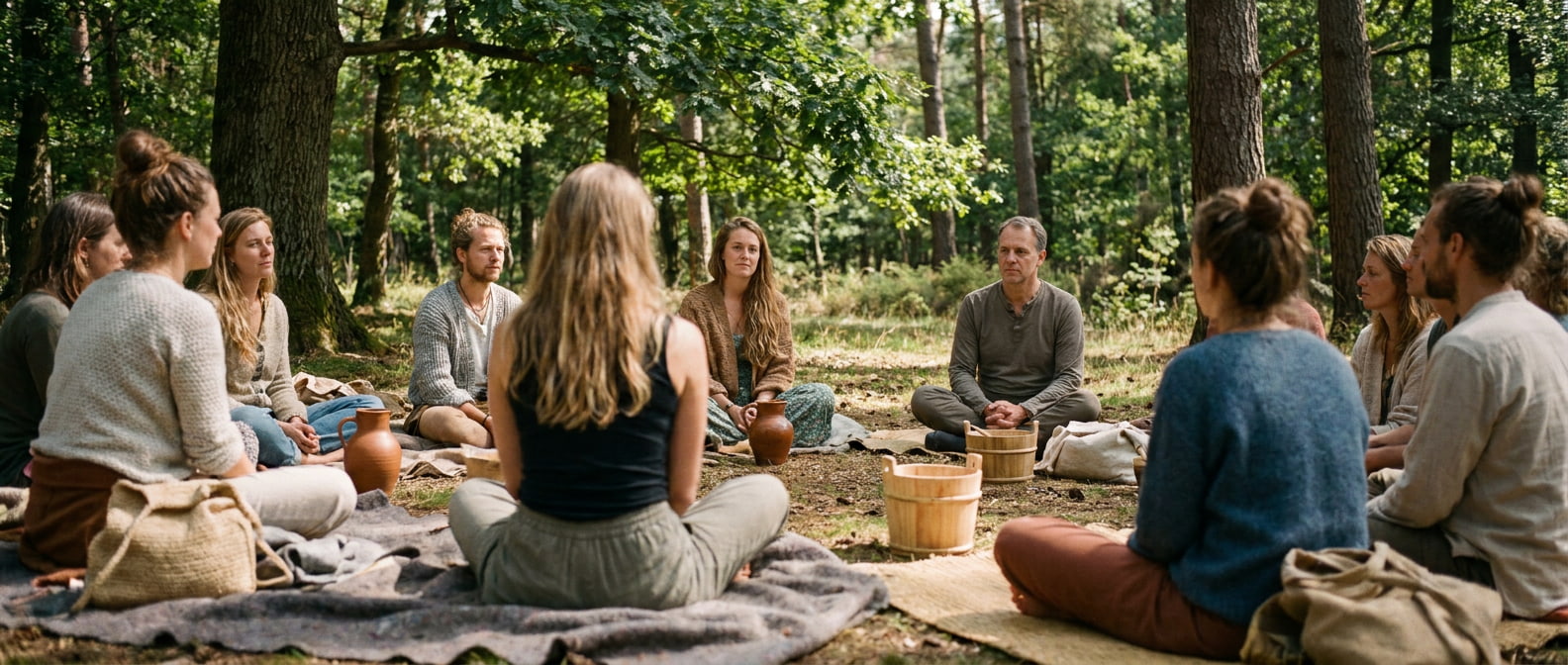
Titles such as “facilitator,” “counselor,” and “shaman” are not protected medical professional titles in the Netherlands. There are no uniform training requirements for commercial providers. Therefore, a detailed intake form does not prove that someone is capable of handling emergency situations.
Ask who will remain sober, how many participants will be present, and how emergency services can reach the location. Also check what rules apply regarding physical contact, privacy, and voluntary departure. Quiet music is not an emergency protocol.
- 1Ask in writing which plants and additives are used.
- 2Be honest about any medical conditions, medications, and supplements.
- 3Check how many supervisors remain sober throughout the entire session.
- 4Ask about first aid training and the emergency plan.
- 5Make it clear in advance that touching requires consent.
- 6Arrange transportation and a quiet place to spend the night.
- 7Resignation due to pressure, confidentiality, or medical guarantees.
An intake assessment can reduce risks, but not eliminate them
A thorough initial assessment identifies known medical conditions and medication use. It does not reveal exactly what is in the concoction. Nor does a consultation rule out a hidden heart problem or an unexpected psychological reaction.
Do not treat ritual objects as if they were interchangeable. Kambo does not contain DMT and has a different risk profile. A San Pedro Cactus contains mescaline and works through other substances.
Ayahuasca is subject to the Dutch Opium Act

DMT is listed in Schedule I of the Opium Act. The preparation, possession, transportation, sale, or distribution of a DMT-containing beverage is a criminal offense. This applies even if the gathering has a religious or traditional context.
The Supreme Court has ruled that the ban may be justified in a religious context to protect public health. Traditional practices in South America therefore do not automatically make a commercial gathering in the Netherlands legal.
After taking ayahuasca, take some time to recover first
Do not plan to drive, work, or take care of others afterward. Fatigue and emotional sensitivity may last longer than the immediate effects. Postpone major financial, relationship, or business decisions until you are sleeping and functioning normally again.
Write down exactly what you’ve experienced. Also write down what change you’re considering and why. Discuss any major plans with someone you trust or with a qualified professional.
- ✓Drink slowly and eat as soon as you're able to again.
- ✓Ensure adequate sleep and a low-stimulus environment.
- ✓Do not use any new psychoactive substances during recovery.
- ✓Keep track of which symptoms persist.
- ✓Ask for help if your performance is declining.
You can find more factual information about psychoactive substances at All posts from Smartific. Ayahuasca can evoke strong emotions and personal insights, but it does not have a predictable dosage and is not a substitute for medical or psychological treatment.
This information is intended for adults and does not constitute medical advice. Smartific does not sell any products that violate Dutch law. Please discuss personal health questions with a doctor or pharmacist.
Ayahuasca FAQs
How does ayahuasca affect your body and perception?
+
How long do the effects of ayahuasca last?
+
Can you combine ayahuasca with antidepressants?
+
Is an ayahuasca ceremony legal in the Netherlands?
+
When should you seek help after a ceremony?
+
Important
This article is intended for informational purposes only. Smartific does not supply any products that violate Dutch law. If you have any doubts or need personal advice, always consult a doctor.