


July
Growing Marijuana in the Netherlands: Everything You Need to Know About the Marijuana Plant and the Rules
Updated on October 29, 2026 · Reading time: 13 minutes
Short answer: The cannabis plant (Cannabis sativa L.) is an annual plant with male and female specimens. Only the unpollinated female flowers contain high levels of THC and CBD. In the Netherlands, growing up to five plants for personal use is tolerated. Growing more plants is a criminal offense. Seeds are legally available for purchase.
Few plants are as well-known and yet as misunderstood as cannabis. The plant has been used for thousands of years for its fibers, seeds, and medicinal properties. At the same time, it is classified as a Schedule II substance under the Opium Act in the Netherlands. Anyone who wants to understand how cannabis works should start with the plant itself.
In this article, you’ll learn all about the biology of the cannabis plant. You’ll find out how it grows and why only female plants produce flowers with high THC levels. We’ll also explain the difference between indica, sativa, and autoflowering strains. Finally, we’ll outline the Dutch regulations for 2026. We’ve deliberately chosen not to include a step-by-step guide to growing here.
Table of Contents
What is the cannabis plant?
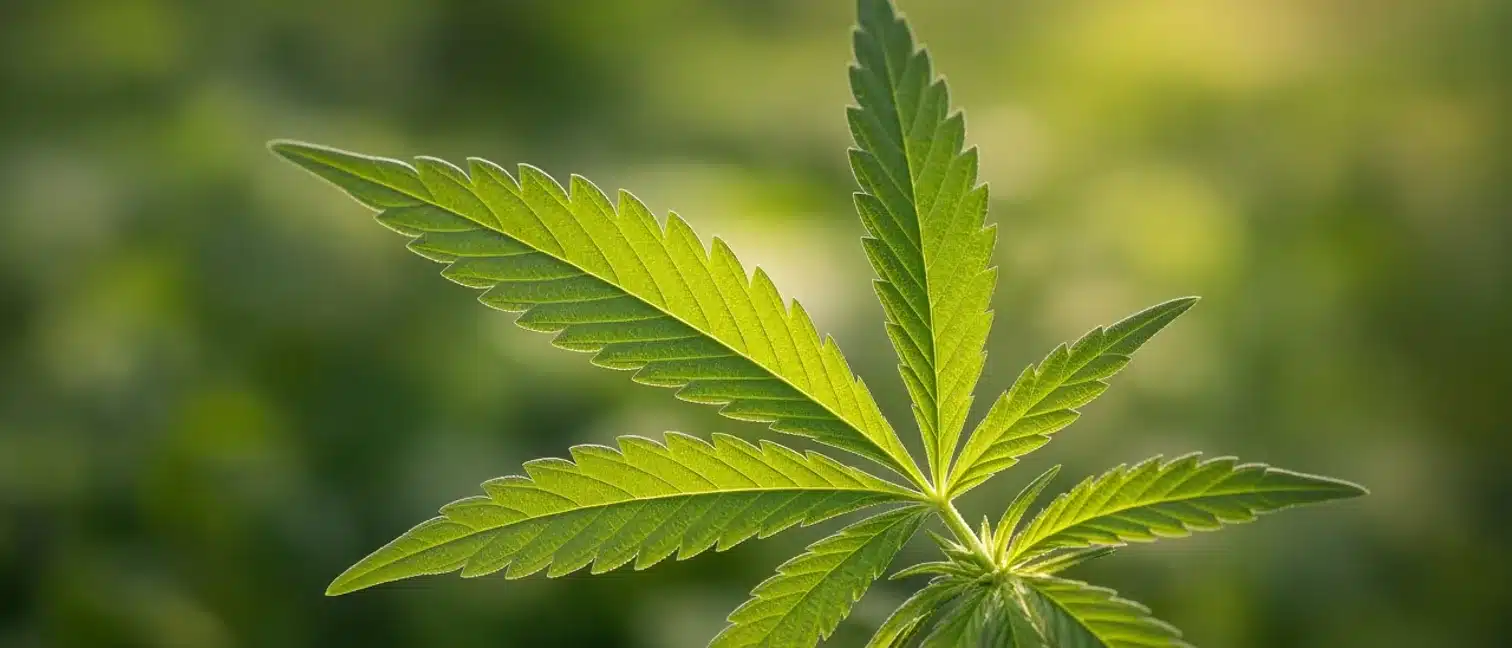
The cannabis plant is officially known as Cannabis sativa L. It belongs to the hemp family, which also includes hops—the plant that gives beer its bitter taste. Cannabis is native to Central Asia. Humans have spread the plant throughout the world.
Botanists have not yet reached a consensus on the classification. Some refer to a single species with different subspecies. Others distinguish between Cannabis sativa, Cannabis indica, and Cannabis ruderalis. In practice, growers and coffee shops still use those three names. They primarily refer to the plant’s form and the origin of a strain.
Hemp and marijuana: the same plant
Hemp and marijuana are the same species. The difference lies in the amount of THC. Industrial hemp is grown for fiber, seeds, and oil. In the European Union, such hemp has been allowed to contain a maximum of 0.3 percent THC since 2023. Marijuana, on the other hand, is bred to have a high THC content. Modern strains often exceed 15 percent.
Male and female plants
Cannabis is naturally dioecious. This means there are male and female plants. Male plants produce pollen in small sacs. Female plants produce flowers with white pistils. These pistils capture the pollen.
If a female flower is pollinated, the plant directs its energy toward seed production. If pollination doesn’t occur, the flower continues to produce resin glands. That’s why cannabis consists of the unpollinated flowers of female plants. In Spanish, this is called “sinsemilla”: without seeds.
Sometimes a female plant also produces male flowers. This is called hermaphroditism. It occurs mainly in response to stress, such as a sudden change in light or temperature. This, too, can result in seeds forming in the flowers.
Trichomes: Where THC and CBD Are Found
If you look at a mature flower through a magnifying glass, you’ll see thousands of glistening hairs. Those are trichomes. They’re tiny resin glands with a small sphere attached to a stalk. The plant produces cannabinoids and terpenes inside that sphere.
The plant first produces acids, such as THCA and CBDA. These are not psychoactive on their own. Only when heated are they converted into THC and CBD. This happens when the plant is smoked or vaporized. When consumed as food, the cannabis must first be heated. Read more about this in our article on How to Make Space Cake.
Why does the plant produce all those substances? Researchers believe that the resin protects the flower—for example, from UV light, dehydration, and insects. The aromatic compounds, or terpenes may keep pests at bay.
The main compounds in the plant
In total, researchers have identified more than a hundred cannabinoids in the plant. Little is known about most of them. The ratio of THC to CBD largely determines how a strain feels.
The Life Cycle of the Plant
A cannabis plant is an annual. In nature, the seed germinates in the spring. The plant grows throughout the summer and blooms in the fall. After that, it dies. Broadly speaking, it goes through four stages.
Germination
A seed contains an embryo with a supply of food. When exposed to moisture and heat, the seed coat cracks open. A small root emerges, followed by two round cotyledons. These cotyledons are not yet true leaves.
Seedling
Next come the first true leaves with their familiar serrated edges. At first, there is one leaf per stem. Later, there are three, five, and sometimes nine or more narrow leaves. At this stage, the plant is still fragile.
Growth Phase
During the growth phase, the plant mainly produces stems, leaves, and roots. It can grow significantly in height during this period. Outdoors, this phase coincides with the long days of summer.
Bloom
A typical cannabis plant begins to flower when the nights become long enough. This is called photoperiodic flowering. In nature, this occurs at the end of summer. About twelve hours of darkness per 24-hour period serves as the signal to flower. During this phase, the flowers develop trichomes. After flowering, a pollinated plant produces seeds. It then dies.
Indica, Sativa, and Hybrid
In the cannabis market, strains are often referred to as indica, sativa, or hybrid. This classification is based on the plant’s form. Indica plants are compact with broad leaves. They are native to mountainous regions such as Afghanistan. Sativa plants are tall with narrow leaves. They come from warmer regions around the equator.
It is often said that indica relaxes you and sativa gives you energy. Research shows that these labels say little about a plant’s chemistry. The ratio of cannabinoids to terpenes is a better predictor of the effect. Moreover, almost all modern strains are hybrids.
Autoflowering, feminized and regular
When choosing marijuana seeds You'll come across three types. They differ in how the plant has been bred.
Regular seeds
Regular seeds produce roughly equal numbers of male and female plants. They are mainly used by breeders who want to develop new varieties themselves.
Feminized seeds
Feminized seeds produce almost exclusively female plants. Breeders achieve this by having a female plant produce its own pollen. That pollen contains no male genes. This reduces the likelihood of male plants.
1TP103 Ting Seeds
Autoflowering These strains contain genes from Cannabis ruderalis. That species is native to Russia and Central Asia, where summers are short. As a result, ruderalis flowers based on its age rather than day length. Autoflowering plants typically remain smaller and mature more quickly.
What determines quality?
Genetics lay the foundation. A strain with high THC levels can produce a lot of THC. How much it actually produces depends on the conditions—such as light, nutrition, temperature, and the plant’s health. The timing of the harvest and the method of save play a role. Read more in our article about the quality of cannabis seeds.
When buying seeds, be sure to choose a reputable breeder. A good seed bank provides information about the strain, flowering time, and expected THC and CBD content. These values are only a guide. Two plants from the same packet may differ.
Wietzaadjes is legally available for purchase in the Netherlands. Growing plants is governed by the Opium Act. A maximum of five plants is tolerated for personal use.
What will the law say in 2026?
Hemp and hashish are listed in Schedule II of the Opium Act. According to Article 3, it is prohibited to cultivate, sell, or possess them. Nevertheless, the Netherlands has a policy of tolerance. As a general rule, the Public Prosecutor’s Office does not prosecute cases involving small quantities for personal use.
- ✓Possession of up to five grams for personal use is tolerated.
- ✓Growing up to five plants at home for personal use is tolerated. However, the police may confiscate the plants.
- ✓Growing more than five plants is considered commercial cultivation. Such activity is actively prosecuted.
- ✓Seeds do not contain THC and are not subject to the Opium Act. They can be purchased legally.
- ✓Selling professional cultivation equipment with the intent to facilitate illegal cultivation is a criminal offense under Article 11a.
Are you renting a home? If so, your landlord or housing authority may enforce stricter rules. Many lease agreements prohibit growing plants. If authorities conduct a raid, your lease may be terminated. Utility companies also monitor high electricity usage.
The "Closed Coffee Shop Chain" Experiment
Since April 2025, a pilot program for a closed coffee shop chain has been underway in ten municipalities. Coffee shops in cities such as Breda, Tilburg, Groningen, Arnhem, and Nijmegen sell only cannabis and hashish from designated legal growers. The experiment is intended to determine whether legal cultivation works effectively. Nothing will change for home growers; the rule limiting cultivation to five plants remains the same.
Medical cannabis
In the Netherlands, you can also obtain cannabis with a prescription. The Office for Medicinal Cannabis oversees its cultivation and distribution to pharmacies. Doctors sometimes prescribe it for chronic pain, nausea caused by chemotherapy, or spasms associated with multiple sclerosis. There are various strains with a fixed ratio of THC to CBD.
Hemp as a cash crop
Industrial hemp is one of the oldest agricultural crops. Its fibers are used to make rope, textiles, and paper. Hemp seeds are nutritious and rich in protein and healthy fats. Oil is also pressed from the seeds. Read about the difference between CBD oil in our article hemp oil and CBD olie. Hemp is also used as insulation.
Risks Associated with Use
Marijuana is not harmless. Regular use can affect your memory and concentration. In people with a predisposition, it can trigger psychosis. Young people are at greater risk because their brains are still developing. Never drive under the influence. The Trimbos Institute recommends not using it daily to smoke weed and not to mix tobacco.
Is it all getting to be too much for you? Then check out our article to see what you can do What to Do If You're Too High.
Common Misconceptions
- ✓Male plants do not contain THC. That's not true. They do contain some THC, but much less than female flowers.
- ✓Indica always makes you feel sluggish. That's not true. The effect depends mainly on the plant's chemistry.
- ✓Hemp oil contains CBD. Usually not. Hemp seed oil contains little to no cannabinoids.
- ✓Five plants is legal. That's not true. It's tolerated. The law still prohibits it.
In a nutshell
The cannabis plant is an annual plant with male and female specimens. THC and CBD are found primarily in the resin glands of unpollinated female flowers. Strains vary in shape, flowering time, and chemical composition. Seeds are legally available for purchase. Growing up to five plants at home for personal use is tolerated. Growing more plants is a criminal offense.
A Brief History of Cannabis in the Netherlands
In 1976, the Opium Act was amended. Since then, the law has distinguished between hard drugs on Schedule I and soft drugs on Schedule II. This amendment gave rise to the policy of tolerance. The first coffee shops opened in Amsterdam in the 1970s. Many more opened in the 1980s and 1990s.
For a long time, most cannabis came from abroad. Starting in the 1980s, more and more was grown in the Netherlands. Dutch breeders became world-famous for strains such as Skunk and Northern Lights. Seed banks sold their seeds all over the world.
The front of the coffee shop is tolerated. The back is not. Coffee shops are allowed to sell cannabis but not to purchase it legally. This is known as the “back-door problem.” The closed coffee shop chain experiment is intended to find a solution to this issue.
How do other countries view this?
More and more countries are changing their laws. Canada legalized cannabis in 2018. Uruguay did so as early as 2013. In Germany, adults have been allowed to grow up to three plants at home since April 1, 2024. They may also join a cannabis club. Recreational use is now permitted in many U.S. states. In other European countries, however, strict penalties apply. So never take cannabis across the border.
What does the THC percentage indicate?
The THC percentage on a seed or in a coffee shop refers to the weight of THC relative to the dried flower. A flower with 20 percent THC therefore contains 200 milligrams per gram. According to measurements by the Trimbos Institute, the average THC content of Dutch cannabis in coffee shops has been around 15 to 20 percent for years. The higher the percentage, the stronger the effect. Therefore, always start with a small amount.
CBD can temper some of the effects of THC. Strains with a balance between THC and CBD feel milder to many people. If you don't want to get high, you might want to consider CBD products with a minimal THC content.
The Cannabis Plant and the Environment
Indoor cultivation consumes a lot of electricity for lighting and ventilation. Outdoors, the plant grows using sunlight. Industrial hemp, on the other hand, is praised as a sustainable crop. It grows quickly, requires few pesticides, and improves soil quality. Hemp also sequesters carbon as it grows.
Want to read more? Then check out our article on Everything About CBD and Cannabidiol.
Wietzaadjes and more at Smartific
Marijuana seeds · Feminized weed seeds · Autoflowering cannabis seeds · CBD products · Head shop
Frequently Asked Questions About the Cannabis Plant
How many cannabis plants are you allowed to grow in the Netherlands?
Are cannabis seeds legal?
Why do only female plants contain high levels of THC?
What is the difference between feminized and autoflowering?
Is hemp the same as marijuana?
Important
This article is intended for informational purposes only. Smartific does not supply any products that violate Dutch law. If you have any doubts or need personal advice, always consult a doctor.