



August
Tinctures: What Are They, How Are They Made, and What Should You Look For?
Updated on October 29, 2026 · Reading time: 10 minutes
Short answer: A tincture is a liquid herbal extract made from alcohol and water. Herbs are steeped in the mixture for several weeks, after which it is strained. Tinctures are concentrated, have a long shelf life, and are used drop by drop. There are also alcohol-free glycerites. Be mindful of the alcohol content during pregnancy, when treating children, while driving, and when taking medications.
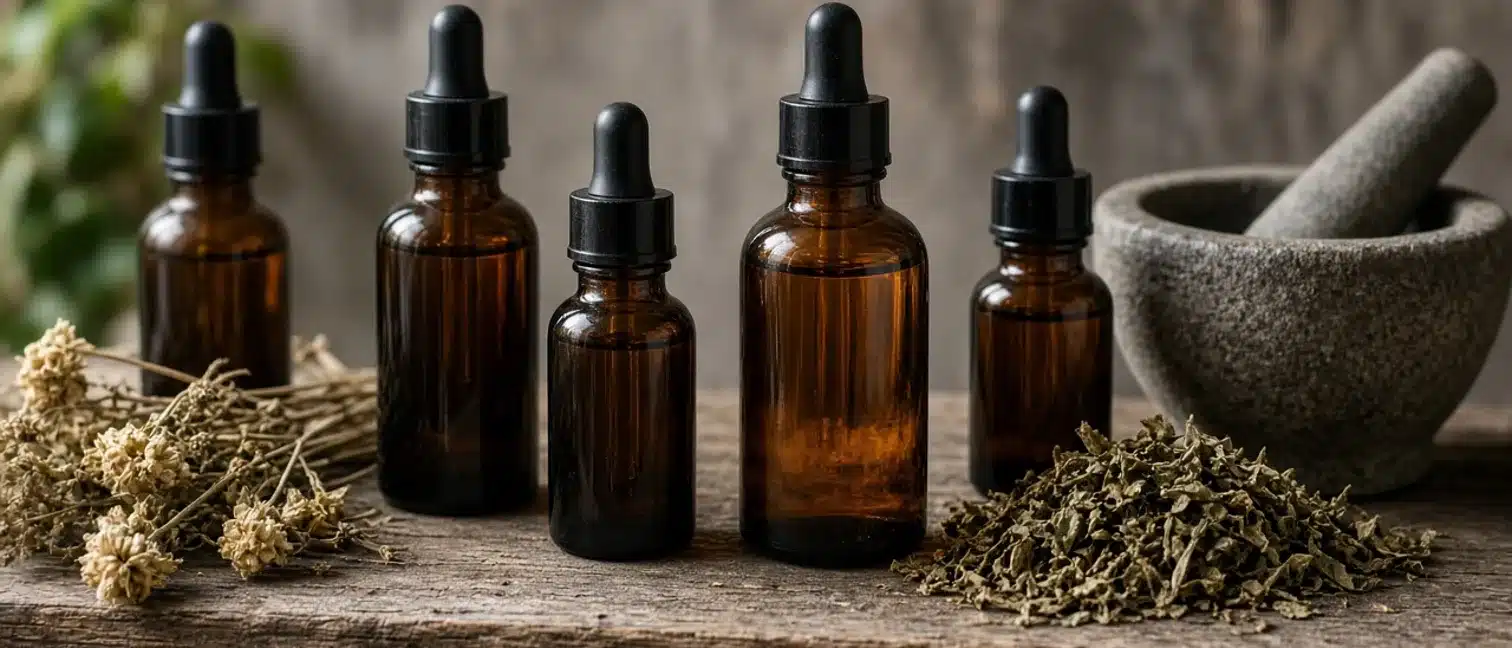
A small brown bottle with a dropper. That’s how you can recognize a tincture. They’ve been used for centuries and are still popular among herbal enthusiasts. But what’s actually inside one of those bottles, and why would you use a tincture instead of tea?
In this article, you’ll learn what a tincture is, where the word comes from, and how tinctures are made. We’ll compare tinctures to tea and extracts, discuss the role of alcohol, and explain what to look for when buying, storing, and using them.
Table of Contents
What is a tincture?
A tincture is a liquid extract of a plant or part of a plant. The plant is left to steep for a period of time in a mixture of alcohol and water. During this process, substances from the plant dissolve into the liquid. The plant material is then strained or pressed out. What remains is a concentrated liquid with the scent, taste, and color of the herb.
The word "tincture" comes from the Latin *tinctura*, which means "to color" or "to dye." This refers to the color that the liquid takes on from the plant.
The ratio
With tinctures, a ratio is often specified, such as 1:5. This means that one part of dried herb is used for every five parts of liquid. The smaller the second number, the more concentrated the tincture. The European Pharmacopoeia, the official European handbook for medicines, describes how tinctures for medicinal use should be prepared.
A Brief History
As far back as ancient times, herbs were steeped in wine or vinegar to extract their active compounds. With the spread of distillation in the Middle Ages, stronger alcohol became available. This allowed apothecaries to produce more potent extracts. The Swiss physician Paracelsus, who lived from 1493 to 1541, was a strong advocate of alcohol-based extracts. He believed that the active core of a plant had to be isolated.
In the 18th and 19th centuries, tinctures were a staple of pharmacies. Every pharmacist had dozens of bottles on the shelf. In the Netherlands, too, tinctures were included in the official list of medicines, the Pharmacopoea Neerlandica. It wasn’t until the 20th century that tablets and capsules rendered many tinctures obsolete.
A tincture is essentially a way to preserve an herb for a long time and concentrate its active ingredients into a small bottle.
Tincture, tea, or extract?
Herbs can be used in various ways. Each method has its own advantages and disadvantages. Water extracts different compounds from a plant than alcohol does. That is why a tincture differs from a tea made from the same herb.
Would you like to learn more about the difference between a tincture and an extract? Then read our article on The difference between a tincture and an extract.
Why alcohol?
Alcohol serves two purposes in a tincture. First, alcohol dissolves many substances that do not dissolve well in water, such as resins and essential oils. Second, alcohol acts as a preservative. Bacteria and fungi do not grow well in a liquid with a high alcohol content. As a result, a tincture remains stable for years.
The alcohol content in tinctures is often between 25 and 70 percent. That’s a lot, but the amount you use at a time is small. A few drops contain less alcohol than a sip of beer. Still, it’s good to keep this in mind.
Non-alcoholic alternatives
Those who do not want to or are not allowed to consume alcohol can opt for a glycerite. In this preparation, vegetable glycerin is used instead of alcohol. Glycerin is a sweet, syrupy liquid. A glycerite has a shorter shelf life than a tincture and does not dissolve certain substances as well. There are also tinctures in which most of the alcohol has evaporated after production.
Well-Known Herbal Tinctures
At Smartific, you'll find a variety of tinctures. Be sure to read our article about Herbal medicine for more background information.
How do you use a tincture?
Tinctures are usually taken one drop at a time. Always follow the dosage instructions on the package. Many people add the drops to a glass of water, juice, or tea. This helps mellow the strong taste. Shake the bottle before use, as sediment may form.
- ✓Use the pipette that comes with the bottle.
- ✓Do not touch the pipette with your mouth to prevent bacteria from getting inside.
- ✓Start with the smallest amount listed on the package.
- ✓Do not use multiple tinctures at the same time without consulting a healthcare professional.
Safety
Tinctures are concentrated. They contain the same active ingredients as the herb itself, but in a smaller amount of liquid. Therefore, the same precautions apply as with other herbal products. Herbs can interact with medications. Check this using the CBG Herb Check or ask your pharmacist.
Be careful with alcohol Do not use alcohol-based tinctures during pregnancy or while breastfeeding. Do not give them to children. Are you taking medications that do not mix well with alcohol, such as certain sleep aids? If so, choose an alcohol-free alternative or consult your doctor.
What does the law say?
In the Netherlands, herbal tinctures are usually sold as dietary supplements or as traditional herbal medicines. A dietary supplement is subject to the Commodities Act. Only approved health claims may appear on the label. A traditional herbal medicine must be registered with the CBG and have an RVG number. Mother tinctures for homeopathy are subject to different rules.
Save
Tinctures are almost always stored in brown glass bottles. This type of glass blocks out light. Store the bottle upright, tightly sealed, and in a cool, dark place. A tincture with a sufficient alcohol content often stays good for years. If you see mold, flakes that weren’t there before, or if it smells different, throw the bottle away. Also check out our article on Storing Herbs.
In a nutshell
A tincture is a concentrated herbal extract made with alcohol and water. It is an ancient form of herbal medicine that remains popular today. Tinctures have a long shelf life and are easy to use. Be mindful of the alcohol content and potential interactions with medications.
How are tinctures made?
When making tinctures, dried or fresh plant material is finely chopped. It is then placed in a mixture of alcohol and water. The alcohol content depends on the herb. For plants rich in resin, producers use more alcohol than for leaves that contain a lot of water-soluble substances. The mixture is usually allowed to steep for a few weeks. It is then filtered and bottled. Professional producers check each batch for quality and purity.
There are two well-known methods. In maceration, the herb remains stationary in the liquid and is shaken occasionally. In percolation, the liquid slowly passes through a layer of herbs. Percolation is faster and is widely used by professional manufacturers.
How to Recognize a Good Tincture
- ✓The label lists the plant's Latin name.
- ✓The part of the plant used is specified, such as the root, leaf, or flower.
- ✓The ratio and alcohol content are listed.
- ✓It has a batch number and an expiration date on it.
- ✓The manufacturer is known and can be contacted.
A good-quality tincture has the color and scent of the herb. It’s best to avoid buying a bottle that doesn’t provide clear information about the plant and the concentration.
Tinctures and Traffic
A few drops of tincture contain very little alcohol. Still, it can add up if you take drops several times a day. Do you drive? If so, keep that in mind. Some herbs, such as valerian, can also make you drowsy. Don’t drive if you feel drowsy.
Not sure if a tincture is right for you? Ask a pharmacist or doctor for advice, especially if you're taking medication or are pregnant.
Store tinctures in their original dark bottles, tightly closed and out of the reach of children. This will help preserve their quality for the longest time. An opened bottle usually stays good for a long time because of the alcohol.
Want to read more? Then check out our articles on adaptogenic herbs for stress, herbs for more energy en functional mushrooms such as reishi.
Tinctures and Herbs at Smartific
Tinctures · Herbs · Supplements · Relaxation · Superfoods
Frequently Asked Questions About Tinctures
What is a tincture?
What does 1:5 mean on a tincture?
How long does a tincture last?
Are there any alcohol-free tinctures?
Can I use a tincture if I'm pregnant?
Important
This article is intended for informational purposes only. Smartific does not supply any products that violate Dutch law. If you have any doubts or need personal advice, always consult a doctor.