


September
Wild dagga (Leonotis leonurus): the plant, tradition, research, and the law
Updated on October 29, 2026 · Reading time: 9 minutes
Short answer: Wild dagga (Leonotis leonurus) is a shrub native to South Africa that belongs to the Lamiaceae family. It is also known as lion’s tail. The plant has been used for centuries in traditional medicine by the Khoikhoi and Zulu peoples, among others. It contains compounds such as marrubin and leonurin. Wild dagga is not listed in the Opium Act. There are no approved health claims.
With its bright orange flowers, wild dagga is one of South Africa’s most striking plants. It is grown as an ornamental plant in gardens around the world. At the same time, the plant has a long history in traditional medicine. In head shops, it is sold as an herb for smoking blends and tea.
In this article, you’ll learn what “wild dagga” is and where the name comes from. We’ll discuss how the plant was traditionally used, what it contains, and what research has shown. You’ll also learn about the risks and what the law says.
Table of Contents
What is wild weed?
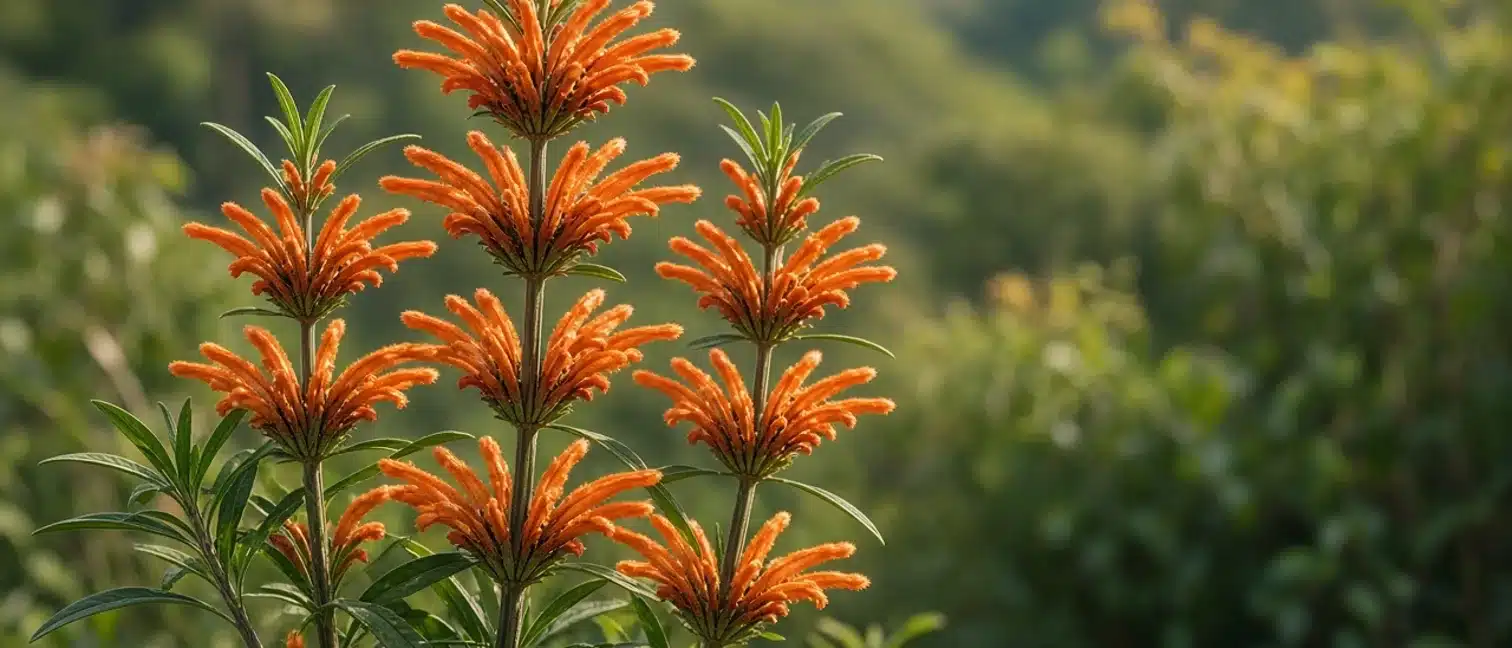
Wild dagga is officially known as Leonotis leonurus. It is a shrub in the mint family, the same family as mint, sage, and lavender. The plant is native to southern Africa. There, it grows in grasslands, along forest edges, and on rocky slopes. It can grow to a height of two to three meters.
The most striking feature is the flowers. They grow in circular whorls around the stem, arranged in tiers one above the other. Each flower is tubular and bright orange, though sometimes white or yellow. Sunbirds feed on the nectar, thereby ensuring pollination. The leaves are narrow, serrated, and have a slightly aromatic scent.
Where does the name come from?
Dagga is the African word for cannabis. It comes from the Khoikhoi word dachab. The name “wild dagga” therefore means something like “wild weed.” This refers to its use as a smoking herb. Botanically, the plant has nothing to do with cannabis. It also contains no THC. The Latin name *Leonotis* means “lion’s ear,” and *Leonurus* means “lion’s tail.” These names refer to the shape of the flowers.
Traditional use
The Khoikhoi and San had been using wild dagga long before the arrival of Europeans. Later, the plant was also used by the Zulu, Xhosa, and Sotho. In traditional medicine, the leaves and flowers were used to treat coughs, fevers, headaches, and snake bites. It was also used as an incense herb during social and ceremonial occasions.
European settlers brought the plant back to Europe as early as the seventeenth century as an ornamental plant. Today, wild dagga is a popular garden plant in warm regions such as California, Australia, and the Mediterranean. In the Netherlands, it can grow outdoors in the summer, but it usually does not survive the winter.
That traditional use is culturally interesting. It does not constitute scientific proof that the plant helps alleviate symptoms. Smartific therefore makes no claims regarding health effects.
What's in wild weed?
Researchers have identified several compounds in the plant. The best known is marrubin. This compound is also found in mallow, a herb from the same family that was traditionally used in cough syrup. In addition, wild dagga contains leonurine, various flavonoids, and essential oils. Leonurine was long thought to be psychoactive. More recent research found leonurine in Leonotis leonurus only in small amounts, if at all. It is best known from Leonurus species, such as motherwort.
It is therefore unclear which substance is responsible for the effects users describe. Users often speak of a mild sense of relaxation. These experiences are subjective and have not been scientifically confirmed.
"Wild dagga" is the name given to cannabis, but it has nothing to do with it. It is a distinct plant with its own history and no THC.
What does the research say?
Most research on wild cannabis has been conducted in the laboratory or on animals. For example, South African researchers studied the anti-inflammatory and pain-relieving properties of extracts in rats. They also examined the effects on blood pressure and blood sugar levels. There are very few studies involving humans.
Animal studies using high doses of the extract also showed signs of possible liver and kidney damage. These results cannot simply be extrapolated to humans. However, they do demonstrate that a natural plant is not automatically harmless.
- ✓There are no large-scale studies in humans.
- ✓There is no approved EU health claim for wild dagga.
- ✓Animal studies suggest both beneficial and harmful effects.
- ✓Little is known about long-term use.
Risks and Precautions
Since there is little research on this, caution is important. Wild cannabis is often smoked. Smoking any herb is harmful to the lungs. Burning releases tar, particulate matter, and carbon monoxide. This is true even if there is no tobacco in it.
- ✓Do not use wild cannabis if you are pregnant or breastfeeding.
- ✓Do not use this product if you are taking medication for high blood pressure or diabetes without consulting a doctor.
- ✓Do not combine it with alcohol or other substances.
- ✓Do not use this product if you have a liver or kidney condition.
- ✓Do not drive a car after using this product.
- ✓Keep out of the reach of children and pets.
Is wild marijuana legal?
In the Netherlands, wild cannabis is not listed in the Opium Act. This means you are allowed to possess and purchase the plant and the dried herb. As an ornamental plant, it is readily available at garden centers. The rules of the Foodstuffs Act apply to its sale as a food product or dietary supplement. Among other things, the Act stipulates that a seller may not make any medical claims.
Different rules may apply in other countries. Therefore, always check the rules before traveling with herbs.
Wild cannabis as a garden plant
If you especially love the flowers, you can simply plant wild dagga as an ornamental plant in your garden or in a large pot. The plant thrives in full sun and well-drained soil. During the Dutch summer, it blooms from late August through fall. Since it isn’t hardy, many people move the pot to a cool, well-lit room during the winter. Bees and bumblebees love the flowers.
Wild marijuana and other herbs
Wild cannabis is often mentioned in the same breath as other herbal smoking substances such as damiana, blue lotus, and skullcap. These plants also have a long tradition, but little research has been conducted on humans. Read more about traditional plants in our blog post on ethnobotany and about Herbal medicine.
Wild cannabis and related plants
The genus Leonotis comprises about ten species. The best-known species, aside from wild dagga, is Leonotis nepetifolia, also known as klip dagga. This species is native to tropical Africa and has since naturalized in parts of Asia and the Americas. Leonotis ocymifolia is also sometimes sold. The species look similar, but their chemical composition may differ. Therefore, when purchasing, be sure to check the Latin name on the packaging.
Wild dagga is also often confused with motherwort, Leonurus cardiaca. This European plant belongs to the same family and has a Latin name that is almost identical. It is a different plant with its own history in European herbal medicine. The confusion is understandable, but the distinction is important. Anyone reading information about one plant cannot simply apply it to the other.
Quality and Origin
Wild dagga sold on the market usually consists of dried flowers and leaves. You can recognize good quality by the bright orange color of the petals and a fresh, herbal scent. Brown, dusty, or musty herbs are old or have been stored improperly. Buy from a seller who lists the Latin name and country of origin. Store the herb in a dry, dark, and cool place in a tightly sealed jar. Read more about storage in our blog post on Storing Herbs.
Do you see products containing wild cannabis that also include other herbs or extracts? If so, be sure to check the label carefully to see what’s in them. With blends, it’s harder to know exactly what you’re using.
Not sure if wild cannabis is right for you? Then start by reading up on it instead of using it. Ask the seller about its origin and composition. And always consult a doctor if you’re taking medication or are pregnant. Even a herb with a long tradition can still interact with modern medications. If you just want to enjoy the plant, you can simply grow it as an ornamental plant in your garden and let sunbirds or bumblebees enjoy the nectar.
Want to learn more? Then check out our articles on Nootropics for Beginners, Natural supplements for athletes en Everything About Kanna.
Herbs at Smartific
Herbs · Top 10 Herbs · Psychedelic herbs · Relaxation · Smartshop
Frequently Asked Questions About Wild Marijuana
What is wild weed?
Does wild cannabis contain THC?
Is wild marijuana legal in the Netherlands?
Has it been proven that wild cannabis is effective against anything?
Can I plant wild cannabis in my garden?
Important
This article is intended for informational purposes only. Smartific does not supply any products that violate Dutch law. If you have any doubts or need personal advice, always consult a doctor.