



July
Medicinal mushrooms: reishi, lion’s mane, chaga, and more
Updated on October 29, 2026 · Reading time: 10 minutes
Short answer: Medicinal mushrooms are mushrooms that have been used for centuries in traditional medicine, especially in Asia. Well-known varieties include reishi, lion’s mane, chaga, cordyceps, shiitake, and turkey tail. They contain compounds such as beta-glucans. A great deal of research is currently underway, but most of it has been conducted in the lab or on animals. In Europe, there are no approved health claims for these mushrooms.
Mushrooms are more than just a tasty addition to a dish. In China, Japan, and Korea, people have been using certain types for their health for centuries. These days, you see them everywhere: in coffee, powders, capsules, and tinctures.
In this article, you'll learn which varieties are the most well-known and where they come from. We'll explain what research has shown so far and what European regulations say about claims. You'll also learn what to look for when buying. Be sure to check out our Medicinal mushrooms.
Table of Contents
What are medicinal mushrooms?
"Medicinal mushrooms" is a collective term. It refers to species that play a role in traditional systems such as Chinese medicine. They are not psychoactive. Therefore, they have nothing to do with magic truffles or magic mushrooms. Many of these species are hard and woody. Therefore, you don’t eat them like button mushrooms. They are usually steeped in hot water or processed into an extract.
The Most Well-Known Species
Reishi
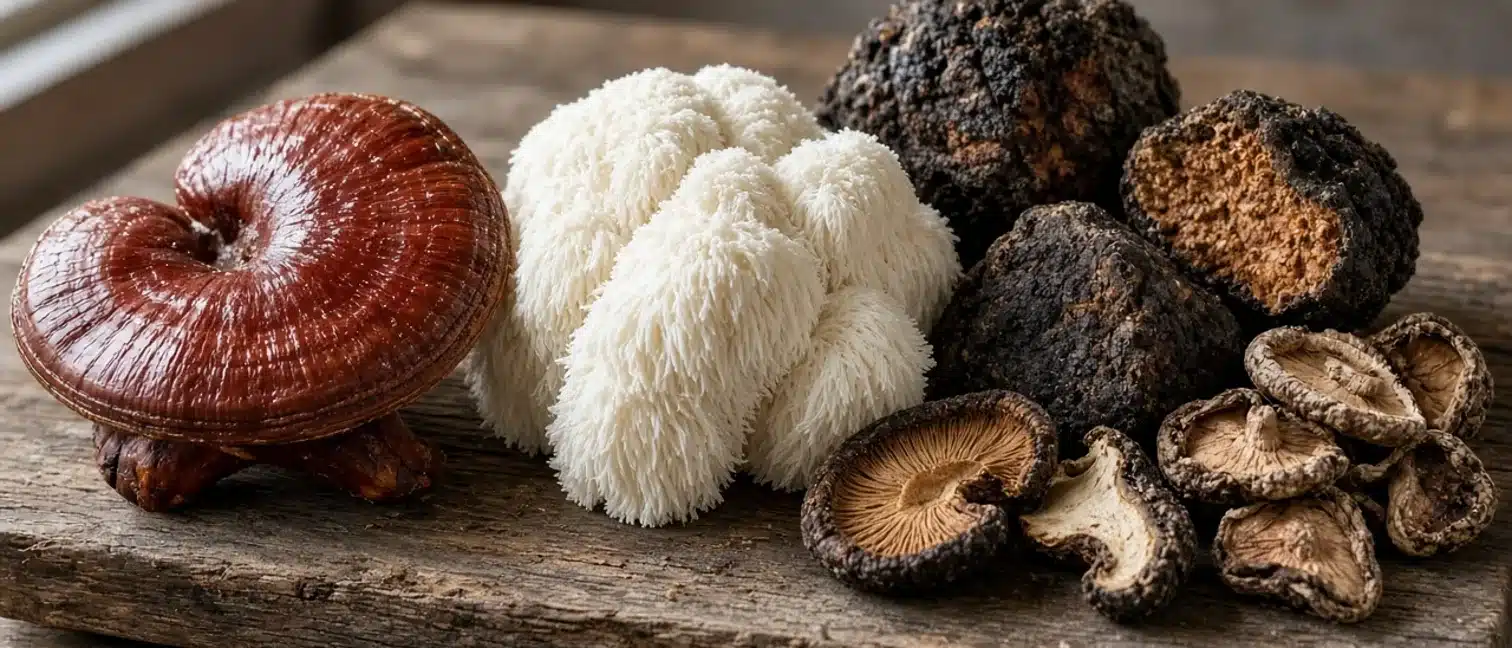
Reishi is a glossy reddish-brown mushroom that grows on wood. In China, it is called lingzhi. It has been described in Chinese texts for over two thousand years. Reishi has a bitter taste and is usually used as a tea or extract.
Lion's Mane
Lion’s mane, also known as the wig mushroom or hedgehog mushroom, looks like a white cascade of spines. It is also edible and tastes a bit like lobster. Researchers are interested in compounds called hericenones and erinacines. In the lab, these appear to influence nerve growth factors. Research in humans is still limited.
Chaga
Chaga is not an ordinary mushroom. It is a black, hard growth that forms on birch trees. In Russia and Scandinavia, chaga has been consumed as tea for centuries. Chaga contains high levels of oxalate. People with kidney problems should therefore exercise caution.
Cordyceps
Wild cordyceps grows on caterpillars in the Himalayas and is extremely expensive. What you buy in stores is almost always Cordyceps militaris, which is cultivated on a growth medium. Athletes They use it to support their endurance, although the evidence for this is limited.
What ingredients are in it?
The best-known compounds in medicinal mushrooms are beta-glucans. These are long sugar chains found in the cell wall. In addition, some species, such as reishi, contain triterpenes. These are what give them their bitter taste. Lion’s mane contains hericenones and erinacines. Cordyceps contains cordycepin.
What does the research say?
Thousands of studies have been conducted on medicinal mushrooms. Most of the research has been done in test tubes and on animals. Studies in humans are often small. In Japan and China, extracts such as turkey tail are used alongside conventional treatments in hospitals. This is always done under the supervision of doctors. The effects of regular supplements have not yet been proven.
What can be included on the label?
In the European Union, only health claims approved by the European Commission may be used. There are no approved claims for medicinal mushrooms. Therefore, a seller cannot claim that reishi boosts your immune system or that lion’s mane improves your memory. If you see such claims, be skeptical.
Medicinal mushrooms are an interesting topic and are the subject of extensive research. Strong health claims are not permitted in Europe.
What should you look for when buying?
- ✓Use of the fruiting body or mycelium on grain. The fruiting body is often preferred.
- ✓A statement regarding the beta-glucan content.
- ✓The extraction method, such as hot water or double extraction.
- ✓Organic farming and a test for heavy metals.
- ✓A clear Latin name.
Safety
Most medicinal mushrooms are well tolerated. However, there are some precautions to keep in mind. Reishi could, in theory, affect blood clotting. Chaga contains high levels of oxalate. If you are taking blood thinners, diabetes medication, or drugs that immune system Are you taking medication? If so, talk to your doctor. There isn't enough information available regarding pregnancy and breastfeeding to recommend it.
The History of Mushrooms as Medicine
The oldest evidence of mushroom use comes from Ötzi, the ice mummy from the Alps. He lived more than five thousand years ago and had pieces of birch mushroom with him. In China, reishi is already described in a herbal book dating back about two thousand years. In Japan, shiitake mushrooms have been cultivated on tree trunks for centuries. In Siberia and Scandinavia, people drank chaga tea instead of coffee.
Fruit body or mycelium?
A mushroom consists of two parts. The mycelium is the network of threads underground or inside wood. The fruiting body is the mushroom you see. Many inexpensive products are made from mycelium grown on grain. These often contain a lot of starch from the grain and fewer beta-glucans. Products made from the fruiting body are usually more expensive. They often contain higher levels of the active compounds. Be sure to check the label carefully.
How do you use them?
- ✓Like tea. Soak dried pieces of reishi or chaga in hot water for a long time.
- ✓As a powder. You can mix a powdered extract into coffee, tea, or a smoothie.
- ✓As a capsule. This comes in handy if you don't like the taste.
- ✓As a tincture. A liquid extract in drop form. Learn more about The difference between a tincture and an extract.
- ✓In the kitchen. Shiitake and lion’s mane are also delicious when fried.
Mushroom Coffee
A popular trend is coffee with mushrooms. This is usually regular coffee with an extract of, for example, lion’s mane or chaga. People drink it as part of their morning routine. It often contains less caffeine than regular coffee. Any additional benefits have not been proven. Many people do enjoy the taste, though.
Mushrooms and Sustainability
Wild chaga and cordyceps are being overharvested in some areas. This harms the environment. Therefore, it’s best to choose cultivated mushrooms or products with a clear source of origin. Cultivated mushrooms are also easier to test for quality and heavy metals.
Difference from magic truffles
Medicinal mushrooms have nothing to do with magic mushrooms or magic mushrooms. They contain psilocybin and induce a psychedelic experience. Medicinal varieties do not contain it. So you can use them during the day without entering an altered state.
Turkey tail and shiitake
In Dutch, turkey tail is simply called “elfenbankje.” It also grows on dead wood in the Netherlands. The name comes from its striped colors, which resemble a turkey’s tail. Turkey tail contains polysaccharides that have been extensively studied in Japan. After the button mushroom, Shiitake is one of the most widely consumed mushrooms in the world. It is rich in flavor and is widely used in Asian cuisine. Raw or undercooked shiitake mushrooms can cause a skin rash in some people. Therefore, always cook them thoroughly.
Quality and Testing
Mushrooms easily absorb substances from their environment. That’s why it’s important that products are tested for heavy metals and pesticides. Reputable suppliers have this testing done by an independent lab. If in doubt, ask for a certificate of analysis.
In summary
Medicinal mushrooms such as reishi, lion’s mane, and chaga have a long history of use. They are the subject of extensive research, but there is still little conclusive evidence from human studies. Health claims are not permitted in Europe. Choose quality products, read the label, and consult your doctor if you are taking any medications.
Mushrooms in Your Daily Routine
Many people incorporate medicinal mushrooms into their daily routine. For example, lion’s mane in their morning coffee and reishi as tea in the evening. Start with a small amount and see how you feel. Stick to the recommended dosage on the package. Take a break every now and then. Also pay attention to your diet, sleep, and exercise. A mushroom is no substitute for a healthy lifestyle.
Not sure which type is right for you? Read the product information in our store or contact our customer service.
Medicinal Mushrooms in the Netherlands
There are also species that grow in the Dutch countryside that are known for their medicinal properties. Examples include the elf’s bench, the birch mushroom, and the lacquer mushroom, a relative of the reishi. Do not pick them yourself for use. Many mushrooms look alike, and some are poisonous. Furthermore, picking mushrooms is not permitted in many nature reserves. Therefore, always choose a product from a store with a clearly identified source.
Want to read more? Then check out our article on Working with Medicinal Herbs.
Mushrooms and Supplements at Smartific
Medicinal mushrooms · Tinctures · Superfoods · Supplements · Vitamins
Frequently Asked Questions About Medicinal Mushrooms
Are medicinal mushrooms psychoactive?
Which medicinal mushroom is the best known?
Has its effectiveness been proven?
What are beta-glucans?
Can I combine medicinal mushrooms with medications?
Important
This article is intended for informational purposes only. Smartific does not supply any products that violate Dutch law. If you have any doubts or need personal advice, always consult a doctor.