



August
Rapé: What Does It Do, How Is It Used, and What Are the Risks?
Updated on October 29, 2026 · Reading time: 8 minutes
Short answer: Rapé is a finely ground snuff from the Amazon region. It is usually made from a strong variety of tobacco, Nicotiana rustica, mixed with ash and plants. Rapé is traditional inhaled through a small tube inserted into the nose. Due to its high nicotine content, it is potent and addictive. It is a tobacco product, not a medication.
Rapé, pronounced “ha-peh,” has become popular outside the Amazon in recent years. You see it at ceremonies, retreats, and in smart shops. There are all kinds of stories circulating about it. What is it really? And what should you watch out for?
In this article, you’ll learn where rapé comes from and what it’s made of. We’ll explain how it’s traditionally used and what people experience when using it. We’ll also discuss the risks of nicotine and the regulations in the Netherlands. Want to start with the basics? Then read our A comprehensive introduction to rapé.
Table of Contents
What is rapé?
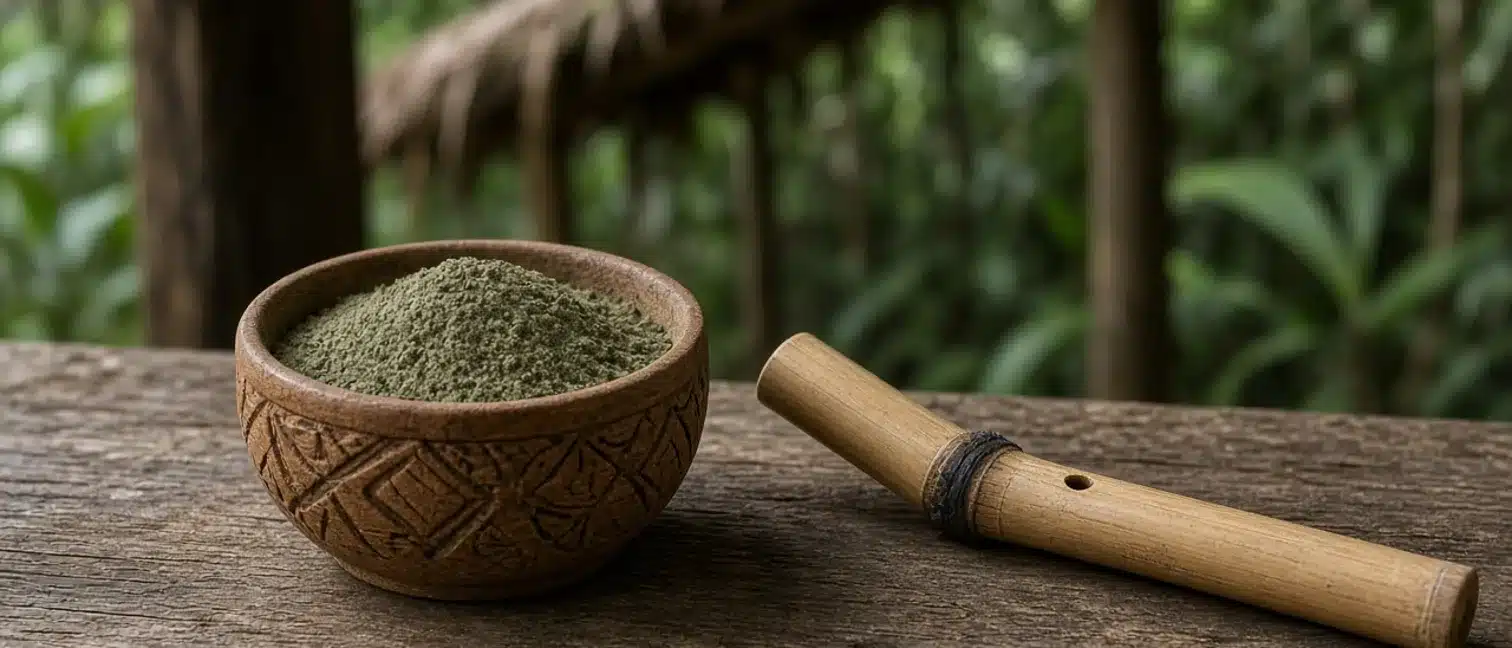
Rapé is a snuff that has been used for centuries by indigenous peoples in Brazil, Peru, and other parts of the Amazon region. Well-known groups include the Huni Kuin, the Yawanawa, and the Matses. Each group has its own recipes and traditions. The word “rapé” comes from Portuguese and means “snuff.”.
The main ingredient in almost all rapé is Nicotiana rustica. In Brazil, this type of tobacco is called mapacho. It contains much more nicotine than regular cigarette tobacco. It is often mixed with the ash of tree bark, such as tsunu or murici. Herbs and seeds are also added for scent and color. The result is a very fine powder ranging in color from green to gray and brown.
How is rapé traditionally used?
Rapé is not smoked but blown into the nose. There are two types of pipes used for this. With a tepi, another person blows the snuff into your nose. With a kuripe, a V-shaped pipe, you do it yourself. In both cases, the powder is blown into the nasal cavity.
Traditionally, rapé is a ritual. It is used in ceremonies, to gather together, to pray, or for hunting. Shamans attribute a purifying effect to it. These are cultural and spiritual meanings. They have not been scientifically studied.
What are the effects of rapé?
The first thing you notice is a strong tingling sensation in your nose. Your eyes may water and your nose may run. After that, the nicotine is quickly absorbed into your bloodstream through the nasal mucosa. People describe a feeling of clarity combined with a deep, grounded sense of calm. This usually lasts ten to thirty minutes.
Because the nicotine content is high, you may also feel dizzy or nauseous Some people vomit. In certain ceremonies, this is sometimes seen as a form of purification. Medically speaking, it’s a sign that your body is taking in too much nicotine.
Rapé is, first and foremost, a potent tobacco product. The effects you feel are largely due to the nicotine. Therefore, treat it with the same respect as other nicotine products.
Is rapé psychedelic?
No. Regular snuff does not contain any psychedelic substances. It does not cause visual effects or trip experience. There are blends that include other plants, but those aren't the norm. Therefore, only buy rapé where the ingredients are clearly listed.
Risks of rapé
Nicotine is one of the most addictive substances in existence. When you use rapé, a large amount of nicotine enters your bloodstream in a short period of time. As a result, you can quickly consume too much.
- ✓Nausea, vomiting, and dizziness caused by too much nicotine.
- ✓A faster heart rate and higher blood pressure.
- ✓Addiction with regular use.
- ✓Irritation and damage to the nasal mucosa.
- ✓Unknown composition of products without clear labeling.
According to the Trimbos Institute, nicotine also impairs brain development in young people. That is why the age limit is 18. Smokeless tobacco, such as snuff, is not harmless either. There is evidence of an increased risk of mouth and throat cancer associated with long-term use of smokeless tobacco.
Who should avoid rapé?
- ✓Young people under the age of 18.
- ✓Pregnant women and women who are breastfeeding.
- ✓People with cardiovascular disease or high blood pressure.
- ✓People who quit smoking or using nicotine.
- ✓People who take medication without consulting a doctor.
Rapé and other substances
Rapé is sometimes used in conjunction with ceremonies that involve the use of other substances. This carries additional risks. Nicotine increases heart rate and blood pressure. When combined with stimulants, this can be too much. Do not combine rapé with alcohol or drugs. Read more about safe combinations in our blog post on mixing magic truffles.
What does the law say?
In the Netherlands, rapé is not a drug as defined by the Opium Act. It is a tobacco product and is subject to the Tobacco and Smoking Products Act. Snuff for nasal use is legally available for purchase to those 18 years of age and older. Tobacco for oral use, such as snus, is banned throughout the EU except in Sweden.
Tobacco products are subject to regulations regarding packaging, warning labels, and sales. As of January 1, 2024, supermarkets are no longer allowed to sell tobacco. Are you traveling abroad with rapé? Be sure to check that country’s regulations. Some countries have strict import regulations for tobacco.
Respect for tradition
For many indigenous peoples, rapé is a sacred substance with a long history. The growing demand from Europe and North America is having an impact. Commercial production is on the rise, and the origin of the product is not always clear. Are you looking to buy rapé? If so, choose a seller who is transparent about its origin and composition.
- 1Ask about its origin and the people who make it.
- 2Check to see if the ingredients are listed on the package.
- 3Do not buy rapé that contains unknown additives.
- 4Store in a dry, dark place, out of the reach of children.
Rapé Compared to Other Tobacco Products
Rapé is not burned. As a result, you do not inhale tar and carbon monoxide as you do when smoking. That does not make it safe. It contains high levels of nicotine, which is absorbed quickly. In addition, the powder can irritate the nasal mucosa. Frequent use can lead to nosebleeds and a stuffy nose.
Storing Rapé
Rapé is sensitive to moisture. Therefore, store it in a tightly sealed jar or bag, in a dry, dark place. This will keep the powder fine and prevent it from clumping. Always keep it out of the reach of children and pets. Even small amounts of nicotine are toxic to them. If a child or pet has ingested any, call your doctor or veterinarian immediately.
Rapé in the Netherlands
In the Netherlands, rapé is mainly used during ceremonies and retreats. Organizers sometimes use it to open a gathering. There are also standalone ceremonies in which only rapé is used. Would you like to participate? If so, ask in advance what will be used and who will be leading the session. A good facilitator will ask about your health and any medications you’re taking. You can always say no to a substance you’re not familiar with.
Be sure to check out our blog post about kambo, another Amazonian ritual that is often mentioned in connection with rapé. Similar considerations apply there.
Common Misconceptions
- ✓Rapé is not a detox. There is no evidence that it cleanses your body.
- ✓Rapé is not harmless just because it is natural. Nicotine is still addictive.
- ✓Rapé does not help you quit smoking. In fact, it contains a lot of nicotine.
What does research say about rapé?
Scientific research on rapé itself is scarce. There are anthropological studies on its use among indigenous peoples, which primarily describe its cultural significance. Little is known about the composition of commercial rapé. An analysis of various products revealed significant variations in nicotine content, making it difficult to estimate how potent a product is.
A great deal is known about nicotine. It increases heart rate and blood pressure, constricts blood vessels, and is highly addictive. These effects also apply to rapé. Because nothing is burned when using rapé, the risks to the lungs are lower than with smoking. However, the risks associated with nicotine remain. People who already use nicotine through cigarettes or vapes will consume even more of it when using rapé.
In short: rapé is a culturally significant but potent nicotine product. Use it with knowledge and respect. Are you sensitive to nicotine? If so, avoid it.
Want to learn more? Then check out our article on Psychedelics in Modern Psychiatry.
Herbs and Ceremony at Smartific
Frequently Asked Questions About Rapé
What's in rapé?
Is rapé addictive?
Is rapé a drug?
Does rapé cause visual effects?
How old do you have to be to use rapé?
Important
This article is intended for informational purposes only. Smartific does not supply any products that violate Dutch law. If you have any doubts or need personal advice, always consult a doctor.